
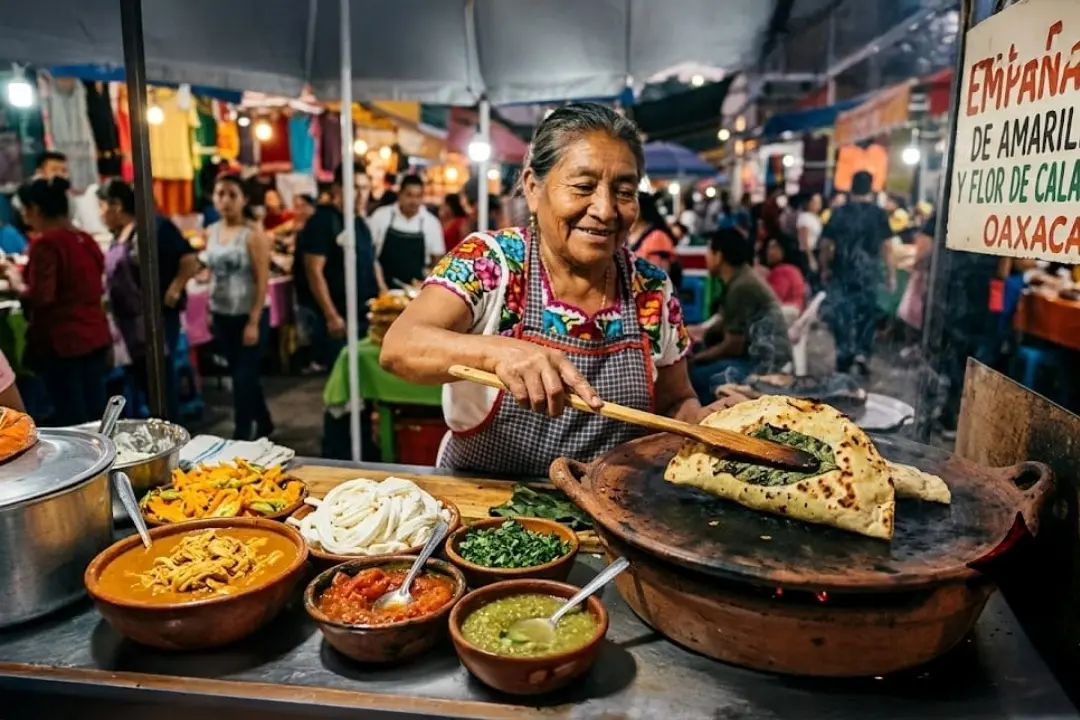
If you travel to the southern highlands of Mexico expecting a small, fried pastry, the traditional Oaxacan empanada will redefine your culinary vocabulary. Forget the flour-based turnovers of the north; in Oaxaca, the empanada is a monumental, corn-based masterpiece that prioritizes smoke and spice over oil and grease.
As the culinary heart of Mexico, Oaxaca offers a street food scene that feels more like a living museum. This guide explores the “Architecture of the Comal” and why this specific dish is a cornerstone of Oaxacan Gastronomy.
1. Defining the Oaxacan Difference: Corn, Clay, and Smoke
Standard empanadas usually rely on wheat flour and a deep fryer. However, the Oaxacan variety remains loyal to Pre-Hispanic nixtamalization techniques.
- The Foundation: Artisans hand-press fresh corn masa into large, thin discs.
- The Vessel: Cooks use a comal—a traditional clay griddle—to toast the dough. This dry-heat method creates a crisp, leathery texture that a fryer simply cannot replicate.
- The Profile: Because it uses no oil, the flavor of the toasted corn shines through, acting as a neutral canvas for the intense moles within.
If you are planning your itinerary, check out our Top 10 Oaxaca Travel Tips to ensure you find these stalls in the hidden corners of the city.
2. The Legend of “Empanadas de Amarillo”
The Empanada de Amarillo (Yellow Mole) is the undisputed icon of the Valles Centrales. While most moles are served over rice, this version is designed specifically for the empanada.
The Anatomy of Yellow Mole
Unlike the sweet, chocolatey notes of Mole Poblano, Mole Amarillo is savory and piquant. Its vibrant orange hue comes from the rare Chilhuacle Amarillo chili.
The Sacred Herb: Hoja Santa
You cannot claim authenticity without Hoja Santa (Piper auritum). This heart-shaped leaf is tucked inside the masa before folding.
Insight: Known colloquially as the “Sacred Leaf,” its anise-like flavor is the chemical signature of a true Oaxacan empanada.
Explore our Guide to Mexican Herbs to learn how Hoja Santa differs from Epazote.
3. San Antonino Castillo Velasco: The Gold Standard
To find the world’s best empanada, you must visit the village of San Antonino Castillo Velasco. The local Doñas have perfected a “thickened” mole (espesado) that prevents the corn shell from becoming soggy.
This regional specialty is so significant that it is featured in the UNESCO Creative Cities Network documentation for Oaxaca. For more on regional day trips, read our Oaxaca Valley Market Guide.
4. Vegetarian Gems: Flor de Calabaza and Huitlacoche
While meat is common, many of the best Oaxacan empanadas are naturally vegetarian.
- Flor de Calabaza: These feature bright squash blossoms and melted Quesillo (Oaxacan string cheese).
- Huitlacoche: Often called “Mexican Truffles,” this corn mushroom offers a deep, earthy umami flavor.
Learn more about the History of Quesillo and why it’s the only cheese that belongs in an authentic empanada.
5. Where to Eat: From Netflix Stars to Local Secrets
Your search for the perfect bite should start at these three locations:
- Empanadas del Carmen: Featured on Netflix’s Street Food: Latin America, this stall is famous for its thin, crispy edges. Located on the corner of Murguía and García Vigil.
- Mercado de la Merced: Visit Fonda Florecita for a sit-down experience. See our Mercado de la Merced Food Tour for a full menu breakdown.
- Mercado de Abastos: For those seeking the raw, bustling energy of Mexico’s traditional markets.
6. How to Identify an Authentic Oaxacan Vendor
When browsing street stalls, use this checklist to ensure you aren’t buying a “tourist version”:
- Is there a Comal? If you see a deep fryer, walk away.
- Is the Masa Fresh? Look for a tortilla press and a bowl of wet masa nearby.
- The Hoja Santa Test: Authentic Amarillo empanadas will always have a visible green leaf inside.
7. Frequently Asked Questions (FAQs)
Q: Are Oaxacan empanadas gluten-free? A: Generally, yes. Traditional empanadas use 100% nixtamalized corn. However, always confirm with the vendor that they did not use wheat flour to thicken the mole.
Q: What is the best drink to pair with an empanada? A: Locals pair them with Tejate, a chilled pre-Hispanic drink made from maize and fermented cacao. For a warm option, try Chocolate Atole.
Q: How spicy is the Mole Amarillo? A: It is moderately spicy. It ranks lower on the heat scale than a habanero salsa but higher than a standard Salsa Verde.
Q: Can I find these in Mexico City? A: You can find Oaxacan restaurants in neighborhoods like Roma or Condesa, but the “comal-toasted” street style is best enjoyed at its source in Oaxaca.
Take the Ultimate Oaxacan Food Tour
The traditional Oaxacan empanada represents more than just a quick meal; it is a bridge to Mexico’s indigenous past. Whether you are chasing the smoky notes of the comal or the herbal complexity of Hoja Santa, your journey through Oaxacan street food starts here.
Ready to start your adventure? Subscribe to our Culinary Newsletter for exclusive recipes and travel guides, or leave a comment below sharing your favorite Mexican street food memory!