
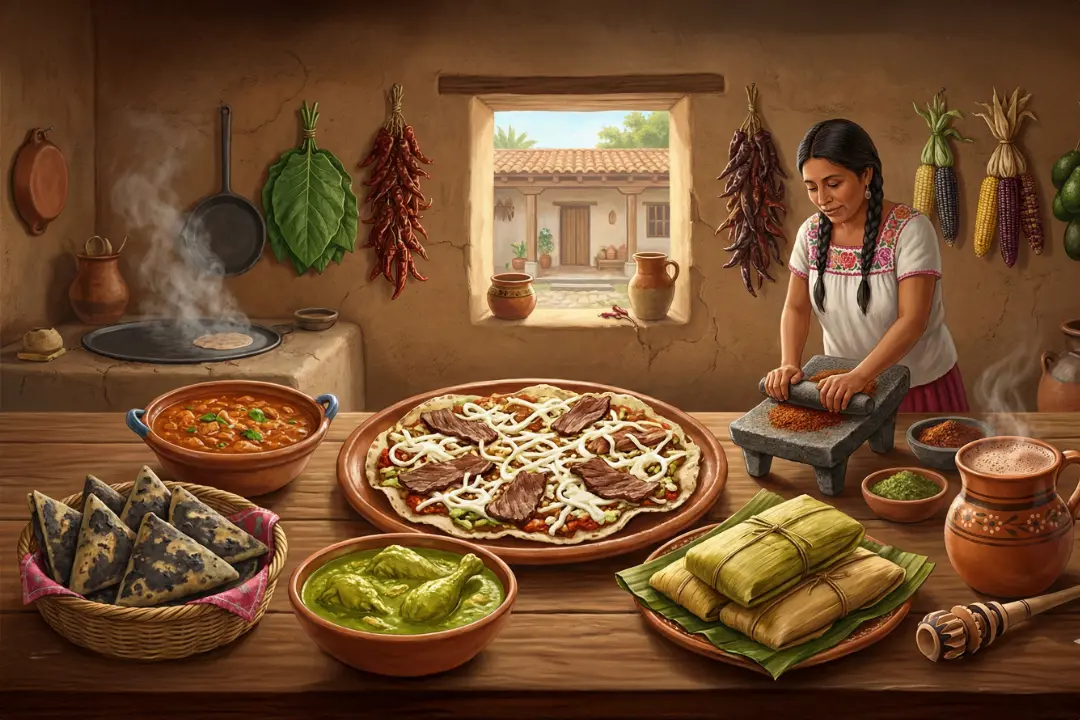
Are you stuck in a “Taco Tuesday” rut? While the taco is a masterpiece of convenience, it is merely the gateway to Mexico’s true culinary heart. To truly transform your home cooking, you must look toward the mist-covered valleys of Oaxaca.
Known as the “Land of the Seven Moles,” Oaxaca offers a culinary landscape so profound that UNESCO has designated it an Intangible Cultural Heritage. Oaxacan food is more than a meal; it is a philosophy of patience. It utilizes charred ancient chiles and slow-simmered ingredients that have sustained civilizations for millennia.
In this guide, we go beyond the taco to introduce seven authentic Oaxacan recipes. These dishes leverage the latest sustainable food movements of 2026: heirloom corn, smoky live-fire techniques, and the sophisticated use of indigenous herbs.
The Oaxacan Pantry: Essential Ingredients for 2026
To cook like a Zapotec master, you must understand the “terroir” of your ingredients. In 2026, the global shift toward heritage crops has made these staples more accessible than ever.
- Heirloom Corn & Nixtamalization: Modern cooks are swapping generic flour for blue and yellow heirloom masa. The ancient process of nixtamalization (soaking corn in lime water) unlocks essential nutrients and creates that unmistakable earthy aroma.
- The Smoky Trinity of Chiles: Seek out the Chilhuacle for deep black moles or the Pasilla de Oaxaca for a leathery, umami heat that adds a transformative punch to any sauce.
- The Secret Herb Garden: Oaxacan beans are infused with Avocado Leaves (offering a subtle anise flavor) or Hoja Santa, a heart-shaped leaf with a complex profile of root beer and black pepper.
- Quesillo: This hand-stretched string cheese is the crown jewel of Mexican dairy. Its unparalleled meltability makes it the essential “glue” for the recipes below.
1. The Oaxacan Tlayuda: The Ultimate “Mexican Pizza”
The Tlayuda is the undisputed queen of Oaxacan street food. Imagine a giant, 14-inch corn tortilla toasted until it’s as crisp as a cracker, then layered with savory treasures.
The “Redefining” Element: It replaces heavy, doughy pizzas with a light, gluten-free corn base that carries a profound charred flavor.
- The Foundation: A large tortilla smeared with asiento (unrefined pork lard) and a velvet-smooth layer of black bean purée.
- The Toppings: Shredded quesillo, fresh cabbage for crunch, and sliced radishes.
- The Protein: Thinly sliced tasajo (salted beef) or spicy chorizo crumbles.
2. Black Bean Tetelas: Elegant Masa Triangles
If you love empanadas, you will be obsessed with Tetelas. These are triangular pockets of masa folded around a heart of savory black beans and creamy cheese.
Why it Works: Tetelas are toasted on a dry griddle (comal), making them lighter and more nutritious than fried snacks. Market trends for 2026 show a 45% increase in functional plant-based snacks—Tetelas fit this perfectly by combining high-fiber legumes with whole-grain corn.
3. Mole Verde: The Herbaceous “Entry-Level” Mole
Forget the 30-ingredient “black mole” that takes days to prepare. Mole Verde is bright, nutty, and vibrant, relying on fresh greens rather than dried chiles and chocolate.
- The Base: Toasted pumpkin seeds (pepitas) provide a creamy, nutty thickness.
- The Flavor: A purée of fresh tomatillos, serrano chiles, and a massive handful of cilantro, epazote, and hoja santa.
- The Result: A 30-minute masterpiece that pairs perfectly with tender pork or poached chicken. Learn more about essential mole techniques here.
4. Velvet Enfrijoladas de Lujo
Think of these as the sophisticated, bean-based cousin of the enchilada. This dish takes the humble bean and elevates it to fine-dining status.
- The Sauce: A “bean silk” created by blending cooked black beans with sautéed onions, garlic, and toasted chile de árbol.
- The Technique: Lightly flash-fry corn tortillas for 10 seconds to make them pliable, then submerge them in the hot bean sauce until fully saturated.
- The Finish: Fold them onto a plate and top with crumbled queso fresco, thinly sliced white onions, and fresh parsley. For more bean-base inspiration, see our guide to Mexican legumes.
5. Tamales Oaxaqueños: The Banana Leaf Difference
While most Mexican tamales use corn husks, the Oaxacan version uses banana leaves, which fundamentally changes the texture.
- Moisture Retention: The banana leaf seals in moisture better than a husk, resulting in a tamale that is almost custard-like in softness.
- Aromatic Infusion: The leaves impart a delicate, tea-like aroma to the masa.
- The Filling: Usually shredded chicken drenched in a rich, dark Mole Negro.
6. Zeguesa: An Ancestral Zapotec Stew
Zeguesa is a pre-Hispanic “corn porridge” stew that uses toasted, coarsely ground corn as a thickening agent instead of flour or cream.
- The Profile: It has a unique, grainy texture and a deep, toasted corn flavor that aligns with 2026’s “Ancient Grains” movement. Check out our history of Zapotec cuisine for more.
- The Preparation: Traditionally made with pork ribs and finished with hoja santa to preserve the herb’s delicate anise-like aroma.
7. Chocolate de Agua & Pan de Yema
In Oaxaca, chocolate is not a candy; it is a ritual. For the ultimate breakfast or dessert, skip the milk and go the traditional route.
- The Drink: Artisanal cacao (ground with cinnamon and almonds) whisked into boiling water using a wood-carved molinillo. Spin the tool between your palms until a thick, stable foam forms.
- The Pairing: Serve with Pan de Yema (yolk bread)—an airy, anise-scented bread designed specifically for dipping into the frothy cacao. Discover more Mexican breakfast traditions.
Frequently Asked Questions (FAQ)
Q: Can I make these recipes without a charcoal grill? A: Absolutely. A cast-iron skillet or a heavy-bottomed stainless steel pan (a modern comal) works perfectly for toasting tortillas and tetelas on a standard stovetop.
Q: What is a good substitute for Hoja Santa? A: If you cannot find fresh Hoja Santa, a mixture of fennel fronds and a pinch of black pepper is a suitable alternative to mimic its anise-like profile.
Q: Is Oaxacan food too spicy for kids? A: Oaxacan cuisine is famous for being flavorful rather than “hot.” While chiles are essential, they are prized for their smoky and fruity qualities. Most of these dishes, especially the Tlayuda and Enfrijoladas, are very family-friendly.
Q: Where can I buy authentic Oaxacan Quesillo? A: Most Latin American grocers stock it. Look for cheese labeled “Oaxaca” or “Quesillo.” In a pinch, a low-moisture, high-quality mozzarella is a functional (though less traditional) substitute.
Elevate Your Culinary Identity
Oaxacan cuisine is a journey of discovery that moves past the fast-food stereotypes of Mexican cooking. By incorporating these seven recipes into your rotation, you aren’t just trying new food; you are engaging with a 3,000-year-old history of flavor.
Ready to start your Oaxacan adventure? Pick one recipe—we recommend the Tlayuda for your next dinner party—and experience how regional Mexican flavors can redefine your kitchen.