
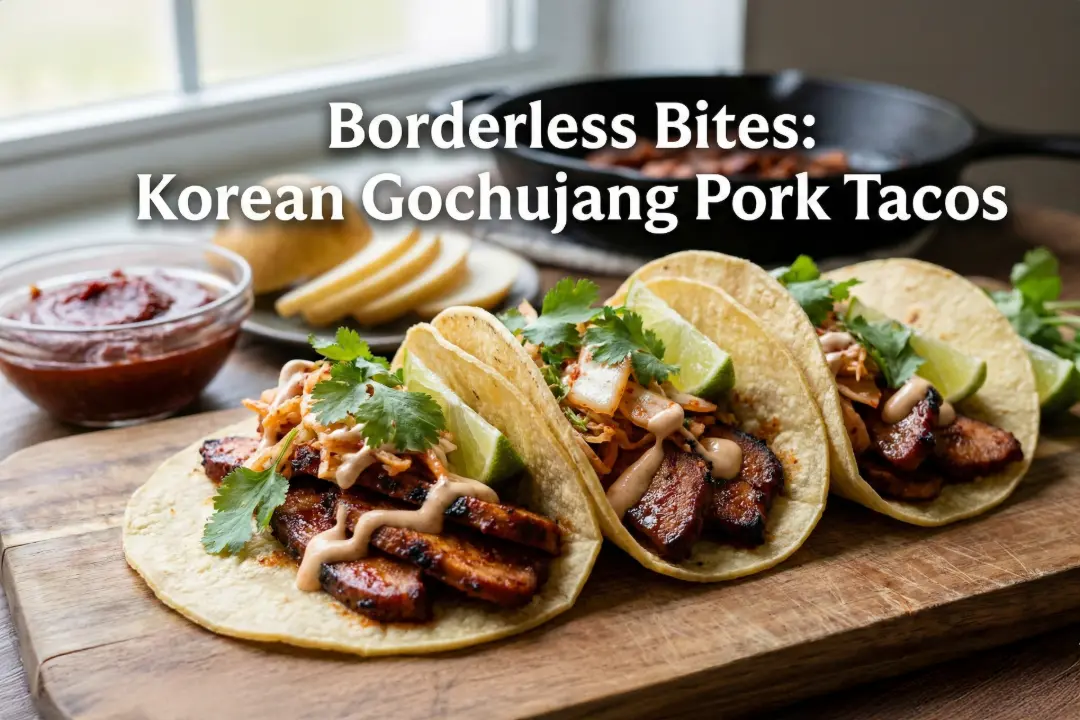
In the modern culinary landscape, “fusion” has moved beyond a mere trend; it has evolved into a philosophy we call Borderless Bites. This approach identifies the soul-deep commonalities between global cultures. Nowhere is this more delicious than the marriage of Korean Gochujang Pork and the Mexican Street Taco.
By fusing the spicy, fermented depth of Korean Jeyuk Bokkeum with the handheld brilliance of a taco, you create a flavor profile that is simultaneously nostalgic and revolutionary. This guide teaches you how to master this 2026 food trend in your own kitchen.
1. The Heritage of Fusion: Why Korean-Mexican Synergy Works
The pairing of Korean and Mexican flavors isn’t accidental. Both cuisines share a foundational love for bold sensory experiences. When you study the history of fusion cuisine, you see that these two cultures prioritize:
- Complex Fermentation: Think of Kimchi meeting the sharp tang of Pickled Jalapeños.
- Charred Proteins: The smoky, high-heat sear of the grill or plancha.
- Textural Contrast: Bold, fatty meats balanced by crisp, acidic toppings.
While the “food truck craze” originally introduced this duo, the 2026 “Home-Bistro” movement focuses on professional-grade techniques—like the science of fermentation—to elevate simple ingredients into extraordinary meals.
2. What is Gochujang? The Secret Ingredient to Umami
You cannot craft an authentic Korean Gochujang Pork Taco marinade without understanding its star component. Gochujang is a thick, savory, and pungent fermented chili paste crafted from red chili powder, glutinous rice, and fermented soybeans.
Why Gochujang is a 2026 Superfood
Unlike vinegar-based hot sauces, Gochujang offers a “slow burn” enriched with deep umami.
- Gut Health Intelligence: As a naturally fermented product, it contains beneficial bacteria similar to those found in premium Greek yogurt.
- Sustained Energy: The capsaicin content, balanced by fermented soy proteins, provides a steady metabolic lift.
- Culinary Depth: It provides a “base note” that makes pork taste slow-cooked, even after a rapid sear.
3. Selecting the Best Pork for Tacos
To achieve the perfect bite, select a cut with enough fat to carry the spice but enough structure to hold its shape within a corn or flour tortilla.
- Pork Shoulder (Boston Butt): This remains the gold standard. Aim for a 70/30 lean-to-fat ratio. This ensures the meat remains succulent during the high-heat searing process.
- Pork Belly: Ideal for “luxe-casual” dining, pork belly offers a higher fat content that caramelizes into crispy, candy-like edges.
Pro Tip: For restaurant-quality slices, place the pork in the freezer for 45 minutes before cutting. This allows you to achieve the paper-thin slices essential for maximum surface area and rapid caramelization.
4. The “Borderless” Marinade: The Science of Tenderness
The most common pitfall in making Gochujang Pork Tacos is tough, chewy meat. We solve this using biology: The Asian Pear.
Asian Pears contain calpain, a natural enzyme that breaks down tough muscle fibers. When these fruit sugars hit a hot pan, they facilitate the Maillard reaction, creating a glassy, mahogany lacquer on the meat.
The Ultimate Marinade Ratio
- Gochujang: 4 tbsp (The heat and soul)
- Soy Sauce: 2 tbsp (The savory salt)
- Grated Asian Pear: 1/2 cup (The biological tenderizer)
- Minced Garlic & Ginger: 1 tbsp each (The aromatic “zing”)
- Toasted Sesame Oil: 1 tbsp (The nutty finish)
5. Master the Sear: How to Cook Gochujang Pork
Follow the High-Heat Method to prevent the marinade from burning while keeping the interior tender:
- Marinate Strategically: Aim for a minimum of 30 minutes and a maximum of 6 hours. Over-marinating with pear can over-soften the meat fibers.
- Cast Iron is Mandatory: Use a pre-seasoned cast-iron skillet to retain consistent heat.
- Avoid Pan Crowding: Sear in small batches. Overloading the pan drops the temperature, causing the meat to steam rather than sear.
- Achieve the Char: Look for blackened, crispy edges. That “burnt” sugar from the pear and gochujang is where the most intense flavor resides.
6. 2026 Topping Trends: Elevate Your Taco Presentation
A “Borderless” taco requires a bridge between Korean and Mexican traditions. Move beyond basic garnishes with these elevated pairings:
- Kimchi Slaw: Toss shredded napa cabbage with aged kimchi and fresh lime zest.
- Miso-Lime Crema: Whisk 1 tsp of white miso into traditional Mexican crema for an extra layer of fermented funk.
- Quick-Pickled Radish: Sliced daikon or red radishes in apple cider vinegar provide the necessary acidic palate cleanser.
7. Frequently Asked Questions (FAQs)
Q: Can I prepare this recipe in an Air Fryer? A: Absolutely. Set your Air Fryer to 400°F (200°C) and cook for 8–10 minutes, tossing halfway through. It produces excellent crispy edges with minimal cleanup.
Q: Is there a suitable Gochujang substitute? A: While nothing replicates the fermented depth perfectly, you can mix Sriracha with a teaspoon of white miso paste to mimic the heat and umami.
Q: How do I choose the best tortillas for fusion tacos? A: Corn tortillas provide an earthy contrast to the sweet pork, while flour tortillas offer a soft, buttery wrap. For the best of both worlds, try “heritage grain” tortillas now trending in modern Mexican cuisine.
Q: Can I make this recipe vegan-friendly? A: Yes. Substitute the pork with thinly sliced King Oyster mushrooms or extra-firm pressed tofu. The marinade works beautifully on plant-based proteins.
Bring the Borderless Bites Experience Home
Mastering Korean Gochujang Pork Tacos at home is about more than just following a recipe; it is about balancing heat, sweetness, and fermentation. Whether you are preparing a quick weeknight dinner or an impressive weekend feast, these tacos represent the pinnacle of global fusion.
Join the Conversation
Which topping will you try first? If you enjoyed this guide, check out our other “Borderless Bites” features, such as our Miso-Glazed Salmon Tostadas guide or our Ultimate Guide to 2026 Food Trends.