
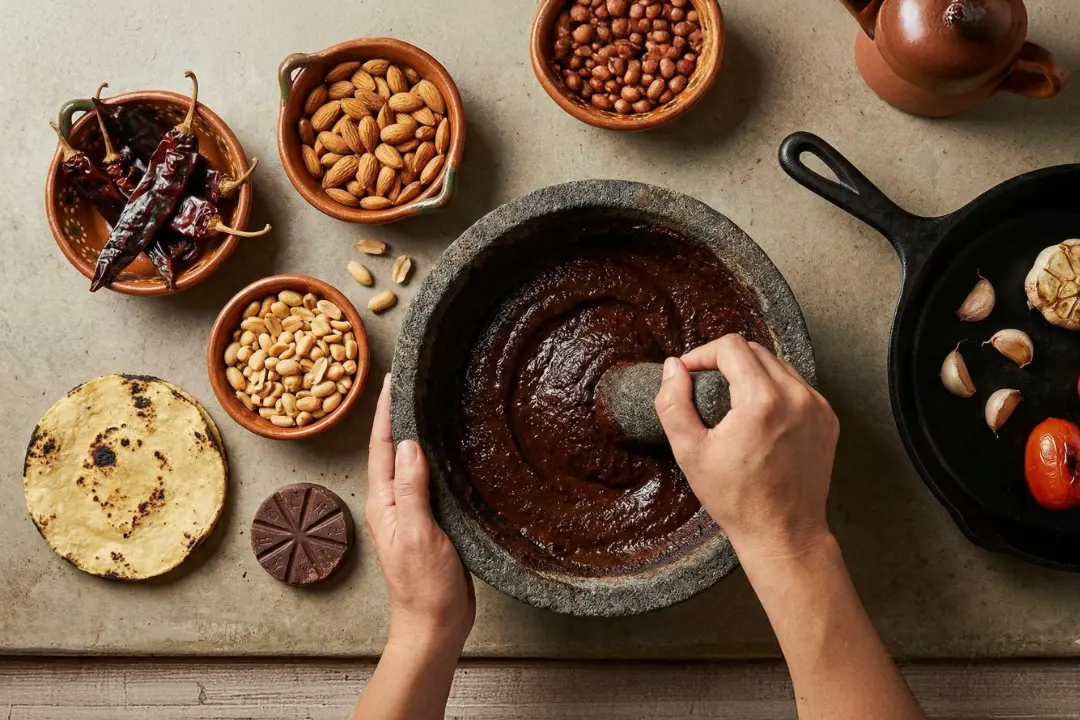
Mole isn’t just a sauce; it is a culinary masterpiece of engineering. True Mexican cuisine relies on a sophisticated symphony of heat, smoke, and sweetness.
To create a world-class sauce, you must move beyond the ingredient list and master these 7 essential mole techniques. These pillars will help you transform humble staples into the “black gold” of the Mexican kitchen.
1. The Alchemy of Dried Chiles: Toasting and Rehydrating
Your foundation rests on the dried chile blend. However, raw chiles hold dormant flavors that require precise activation.
- Precision Toasting: Use a dry cast-iron comal over medium heat. Press the chiles flat for 30–60 seconds per side until fragrant.
- The Golden Rule: If a chile turns black or smells acrid, discard it. Over-toasting creates an irreversible chemical bitterness that no amount of sugar can mask.
- Gentle Rehydration: Soak toasted chiles in warm (not boiling) water for 20 minutes. Boiling water “shocks” the skins, dulling the vibrant oils and resulting in a muddy flavor.
2. The Individual Fry: Why Fat Selection Matters
In traditional Mexican cuisine, fat is a primary flavor carrier. Using manteca (lard) or a high-quality neutral oil is essential for that signature silky mouthfeel.
- Batch Frying: Many beginners mistakenly fry nuts, seeds, and spices together. Because almonds, peanuts, and pumpkin seeds possess different densities, you must fry them separately to achieve a perfect golden brown without scorching.
- Maillard Reaction: This frying process triggers the Maillard reaction, intensifying the savory, toasted profile of your base ingredients. For a deeper dive into the science, see our guide on Mexican culinary techniques.
3. Structural Thickeners: The Secret to Perfect Consistency
A professional mole must elegantly coat the back of a spoon. Unlike French sauces that utilize a flour-based roux, mole relies on “structural bridges” of fried starches.
- The “Burnt” Tortilla: Frying a stale corn tortilla until crisp—or even slightly charred—adds earthy depth and provides the essential body.
- Bread and Fruit: Fried bolillo (bread) adds a smooth texture, while ripe plantains provide a pectin-rich density and a natural sheen. Check out our recipe for traditional Bolillo for the best results.
4. Tatemado: The Power of Charred Aromatics
While some ingredients require frying, others must be tatemados—dry-roasted until their skins blister and blacken.
- Smoky Umami: Place unpeeled garlic, onions, and tomatoes directly on a hot comal. The blackened skins provide a smoky umami flavor that mimics traditional wood-fire cooking.
- Garlic Tip: Roast garlic in its skin to steam the cloves inside, turning them sweet and buttery rather than sharp. Explore more about charring techniques.
5. The Emulsification Phase: Achieving a Velvety Texture
The hallmark of an elite mole is its texture. Historically achieved via a stone metate, you can reach this level with modern technology through two critical steps:
- High-Power Blending: Blend in small batches to prevent friction from heating—and potentially separating—the fats.
- The Double Strain: You must pass the sauce through a fine-mesh sieve. This removes stubborn spice fibers and chile skins, ensuring a professional, “velvet” finish.
6. Sazonar el Mole: The Final Oil Fry
Once blended, the mole is still technically “raw.” The most critical phase for flavor development is the final reduction in hot fat, often called sazonar.
- The Splash: Pour the blended sauce into a pot of shimmering hot oil. Be careful; the reaction is vigorous.
- The Darkening: Simmer on low heat, stirring constantly. The color will transform from a bright red-brown to a deep mahogany as the flavors integrate. For more on this, visit our Mole Poblano Masterclass.
- The Mirror Test: According to The Culinary Institute of America, mole is ready when a thin layer of oil (the “mirror”) pools on the surface, signaling total emulsification.
7. The Art of Balance: Seasoning to the Soul
The final stage involves balancing the five tastes.
- Bitterness vs. Sweetness: Mexican chocolate should act as a floral bass note, not a dominant sugar source.
- The Brightener: If the sauce feels “flat,” a teaspoon of apple cider vinegar or lime juice will “lift” the flavors and cut through the richness. Discover our flavor balancing tips.
Frequently Asked Questions (FAQ)
How do I fix a bitter mole? Bitterness usually results from over-toasted chiles. You can balance this with a pinch of salt and a small amount of piloncillo (raw sugar), but the best fix is prevention during the toasting stage.
Can I make mole ahead of time? Yes. Mole tastes significantly better 24–48 hours after cooking as the spices continue to marry. This is why many chefs maintain a “Mole Madre” (Mother Mole) that ages for years. Learn about aging mole.
What is the best way to reheat mole? Reheat slowly over low heat. Add a splash of chicken broth or water to restore the original consistency if it has thickened in the fridge.
Why is my mole grainy? Grainy mole is usually caused by insufficient blending or skipping the straining step. Re-blend the sauce and pass it through a fine-mesh sieve to achieve a professional texture.
Ready to Master the Molcajete?
Understanding these essential mole techniques is the first step toward culinary mastery. By focusing on the process rather than just the recipe, you ensure a result that is rich in history and flavor.