
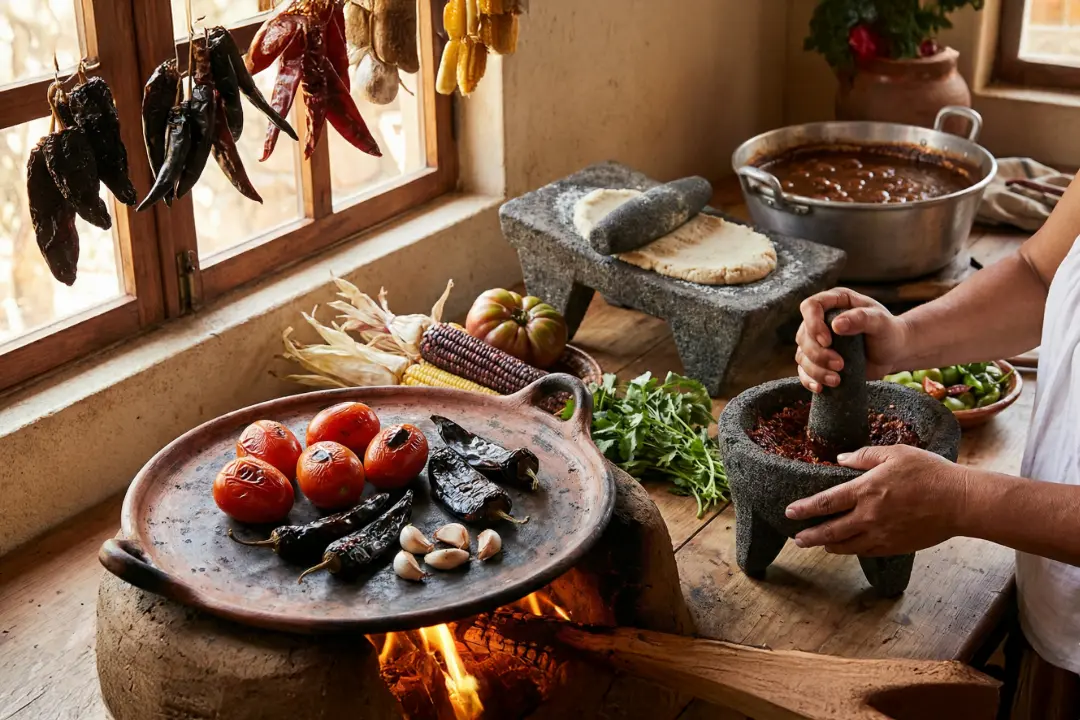
Mexican gastronomy is far more than a collection of recipes; it is a sophisticated system of ancient technologies and culinary sciences that have evolved over four millennia. In fact, UNESCO recognizes Mexican cuisine as an Intangible Cultural Heritage of Humanity. This honor recognizes the ancestral methods that transform humble ingredients into nutritional powerhouses.
To master Mexican cooking, you must look beyond the ingredients. You must master the Mexican culinary techniques that define the soul of the kitchen. This guide explores the foundational methods—from the chemical magic of nixtamalization to the smoky art of the comal—that will elevate your home cooking to professional standards.
1. The Science of Nixtamalization: Unlocking the Power of Corn
If one “super-technique” defines Mesoamerican culture, it is the nixtamalization process. Without this 3,000-year-old biohacking method, the great civilizations of the Aztecs and Mayans might never have flourished.
How Nixtamalization Works
The word comes from the Nahuatl nextli (ashes) and tamalli (corn dough). It involves cooking and soaking dried corn in an alkaline solution, traditionally water mixed with cal (calcium hydroxide).
- The Transformation: The alkaline solution breaks down the hemicellulose in the corn’s cell walls. This softens the kernel and loosens the hull.
- The Result: Once rinsed and ground, the corn becomes masa. This dough is more pliable, aromatic, and flavorful than any standard cornmeal. Learn more about selecting the right corn for masa.
Nutritional and Culinary Benefits
- Bioavailability: Nixtamalization “unlocks” Vitamin B3 (Niacin), preventing nutritional deficiencies like pellagra.
- Mineral Enrichment: The process increases calcium absorption by up to 20 times. For a deep dive into the health benefits, see this study on alkaline cooking.
- Flavor Profile: This process creates the distinct “tortilla smell” that is the hallmark of authentic Mexican street food.
2. The Art of the Comal: Mastering Dry-Roasting and Charring
In a Mexican kitchen, the comal (a flat griddle) is as essential as a chef’s knife. Mastering comal roasting methods allows you to achieve the smoky, complex profile found in world-class salsas.
Essential Charring Techniques
- Tatemado (The Deep Char): Place tomatoes, tomatillos, and garlic directly on a hot comal until the skins blacken. This caramelizes natural sugars and introduces a “humo” (smoke) element that a blender cannot replicate.
- Toasting Dried Chiles: Wake up the essential oils in Guajillo or Ancho chiles by toasting them for 30–60 seconds. Learn the difference between dried chiles to avoid common mistakes.
- Seed Blooming: Dry-roasting pumpkin seeds (pepitas) on the comal “blooms” their flavor before they are ground into pastes.
3. The Complexity of Moles: The Secret to Flavor Layering
Mole is often misunderstood as just a “chocolate sauce.” In reality, traditional mole cooking methods are a masterclass in emulsification.
The Power of the “Refrito”
The secret to a world-class mole is the frying. Once you puree the ingredients, you must fry the paste in hot lard or oil. The paste should sizzle upon contact, deepening the color and “locking in” the spices. For more on advanced sauce-making, visit Culinary Science of Mexico.
4. Manual Grinding: Why Texture Equals Flavor
When it comes to manual grinding techniques, your tool dictates your taste.
- The Molcajete (Volcanic Stone Mortar): Unlike a food processor that “shears” cells, the porous volcanic stone crushes them. This releases more essential oils and creates a rustic texture that holds onto a chip better than a watery puree.
- The Metate: This flat stone is used for masa and chocolate. Its shearing motion produces an ultra-fine, silky consistency. Discover where to buy authentic volcanic stone tools.
5. Slow-Cooking & Steam: The Heritage of Barbacoa and Pib
Authentic Mexican braising often happens underground or under a veil of aromatic leaves.
- Vapor-Cooking: Using maguey or banana leaves to wrap meats creates a natural pressure cooker. The leaves trap moisture while imparting a tea-like, herbal aroma. For a modern take, check out our Dutch Oven Barbacoa recipe.
- The Pib Method: Traditional Maya cooking uses an earth oven (pib). You can read about the archeology of Maya cooking to see how this method has remained unchanged for centuries.
Frequently Asked Questions (FAQ)
Q: Can I substitute cornmeal for masa harina? A: No. Standard cornmeal is made from raw corn and lacks the chemical transformation of nixtamalization. It will not form a cohesive dough. For the best results, use Minitland’s guide to nixtamalization.
Q: Why do my dried chiles taste bitter? A: You likely over-toasted them. Chiles should be fragrant and soft, not brittle or smoking. If they turn black and smell acrid, discard them.
Q: Is a stone molcajete better than a blender? A: Yes. The friction of the stone releases oils and creates an emulsified texture that blenders cannot achieve. It is the difference between a “flat” salsa and a “vibrant” one.
Q: Where can I find “Cal” for nixtamalization? A: Look for “Slaked Lime” or “Calcium Hydroxide” in Mexican grocers or food-grade suppliers like Modernist Pantry.
Embrace the Legacy
Mastering Mexican culinary techniques preserves a 4,000-year-old legacy. By embracing the comal, the molcajete, and the science of nixtamalization, you transform your kitchen into a space of culinary alchemy.
Ready to transform your cooking? Start with the “char.” This weekend, try the tatemado method for your next salsa. Subscribe to our newsletter at Holy Mole for more lifestyle and culinary guides.