In global gastronomy, we often discuss the “terroir” of wine or the “origin” of coffee. Yet, salt—the most essential ingredient in your kitchen—is frequently relegated to a generic blue cylinder. In Mexico, salt is a cultural legacy, an ancestral craft, and a nutritional powerhouse.
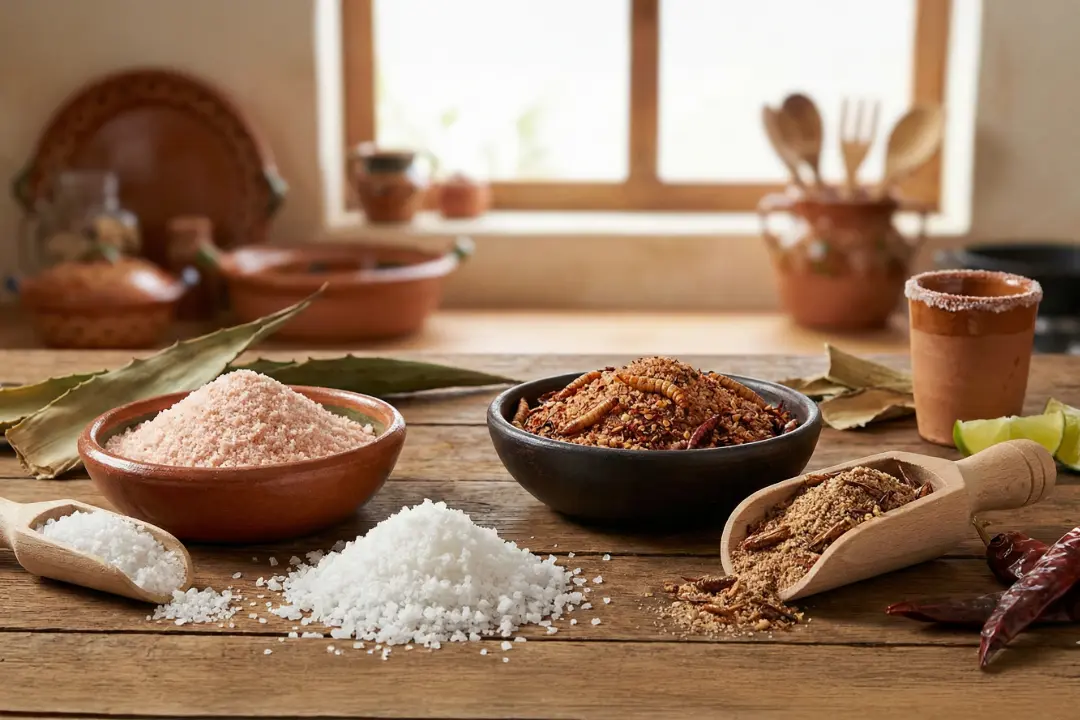
From the volcanic-filtered lagoons of the Pacific to the pink-tinted basins of the Yucatán, Mexican salt varieties offer a complexity of flavor that industrial table salt cannot replicate. This guide explains why “Mexican White Gold” is the top choice for Michelin-starred chefs and health-conscious home cooks.
Why Mexican Artisanal Salt Beats Industrial Table Salt
To appreciate artisanal Mexican salt, you must understand how it differs from the highly processed “table salt” sold in most supermarkets.
Unrefined Purity vs. Chemical Processing
Industrial salts are often mined from underground, chemically bleached, and stripped of vital minerals. Manufacturers add anti-caking agents like sodium aluminosilicate to prevent clumping.
In contrast, authentic Mexican sea salt is:
- Solar Evaporated: The sun and wind do the work.
- Hand-Harvested: Skilled salineros use techniques passed down through centuries.
- Mineral-Dense: It retains trace minerals like magnesium, potassium, and calcium, which are essential for electrolyte balance.
The Low-Sodium Health Advantage
One of the most significant Mexican sea salt benefits is its sodium profile. While standard table salt is nearly 40% sodium, high-quality Colima salt typically contains only 29% to 33% sodium. This allows you to achieve a bold flavor while managing your daily sodium intake.
Colima Sea Salt: The Microplastic-Free Miracle
Colima Sea Salt from the Laguna de Cuyutlán is the “Champagne” of Mexican salts. Locally known as Oro Blanco (White Gold), its reputation for purity is unmatched.
The Power of Volcanic Filtration
The geography of Colima sets its salt apart. These salt beds sit atop volcanic soil. As water settles into the lagoons, it filters through layers of volcanic earth, creating two key benefits:
- Enriched Mineral DNA: The salt absorbs high levels of magnesium and iron.
- A Solution to Microplastics: While many open-ocean salts face microplastic contamination, the subterranean filtration in Colima acts as a natural sieve.
How to Use Finishing Salts
Colima salt is a “finishing salt.” Its crystals are soft, moist, and often form delicate hollow pyramids. Because it dissolves instantly, it provides an immediate flavor “pop” without a metallic aftertaste.
Oaxacan Specialty Salts: The Ultimate Umami Bomb
In Oaxaca, the culinary heart of Mexico, chefs blend salt with local ingredients to create complex seasonings. These are essential for any comprehensive Mexican salt guide.
- Sal de Gusano (Agave Worm Salt): A smoky blend of toasted Chinicuiles (agave larvae), sea salt, and dried chiles. It is the mandatory partner for authentic Mezcal tasting.
- Sal de Chapulín (Grasshopper Salt): A sustainable, nutty seasoning made from toasted grasshoppers and lime. It’s a perfect rim for cocktails or a topping for fresh fruit.
- Chicatana Salt (Flying Ant Salt): A rare delicacy with fatty, cocoa-like notes, harvested only after the first rains of summer.
Celestún: The Delicate Pink Salts of the Yucatán
The Yucatán Peninsula produces a salt that is as visually stunning as it is subtle.
The “Flamingo” Effect
In the Celestún Biosphere Reserve, salt ponds often turn a vibrant pink. This occurs naturally due to Artemia salina (brine shrimp) and specific micro-algae—the same organisms that give flamingos their iconic color.
The Best Salt for Seafood
Yucatán sea salt has a “sweeter” profile with less “bite.” This makes it the best salt for seafood and ceviche, as it enhances delicate flavors without overpowering them. If you are exploring modern Mexican recipes, this salt is a non-negotiable ingredient.
Comparing the Options: Mexican Sea Salt vs. Table Salt
| Feature | Industrial Table Salt | Mexican Artisanal Salt |
| Harvest Method | Mechanical Mining | Hand-harvested / Solar |
| Sodium Content | ~39% | ~30% – 33% |
| Additives | Bleach & Anti-caking agents | 100% Natural |
| Trace Minerals | Stripped | High (Mg, K, Ca) |
| Sustainability | High Carbon Footprint | Eco-friendly / Low Impact |
Frequently Asked Questions (FAQ)
1. Is Mexican sea salt iodine-fortified?
No. Natural artisanal salts generally do not contain synthetic iodine. While they have trace amounts of marine iodine, individuals with iodine deficiency should ensure they get this nutrient from other dietary sources.
2. Why does my Mexican salt feel damp or moist?
Authentic Colima or Yucatán salt is naturally hygroscopic, meaning it attracts moisture. This is caused by magnesium chloride. This “dampness” is a hallmark of high-quality, unrefined salt that hasn’t been chemically dried.
3. Can I use Mexican sea salt for baking?
Yes, but with caution. Because the crystals vary in size, measuring by weight (grams) is more accurate than measuring by volume (teaspoons). For more kitchen tips, check out our guide on financial education for the home.
4. Where can I buy authentic Mexican salt online?
Look for reputable suppliers that source directly from the salineros in Colima or Yucatán. Authenticity is key to ensuring you receive the full mineral benefits.
Elevate Your Culinary Experience
Upgrading to Mexican salt varieties is a simple change with profound results. By choosing these salts, you support the sustainable practices of the salineros and provide your body with a cleaner, mineral-rich seasoning.
Ready to transform your dishes? Swap your standard salt for authentic Colima or Oaxacan salt today.
Explore more about Cabo San Lucas and Mexican culture: