
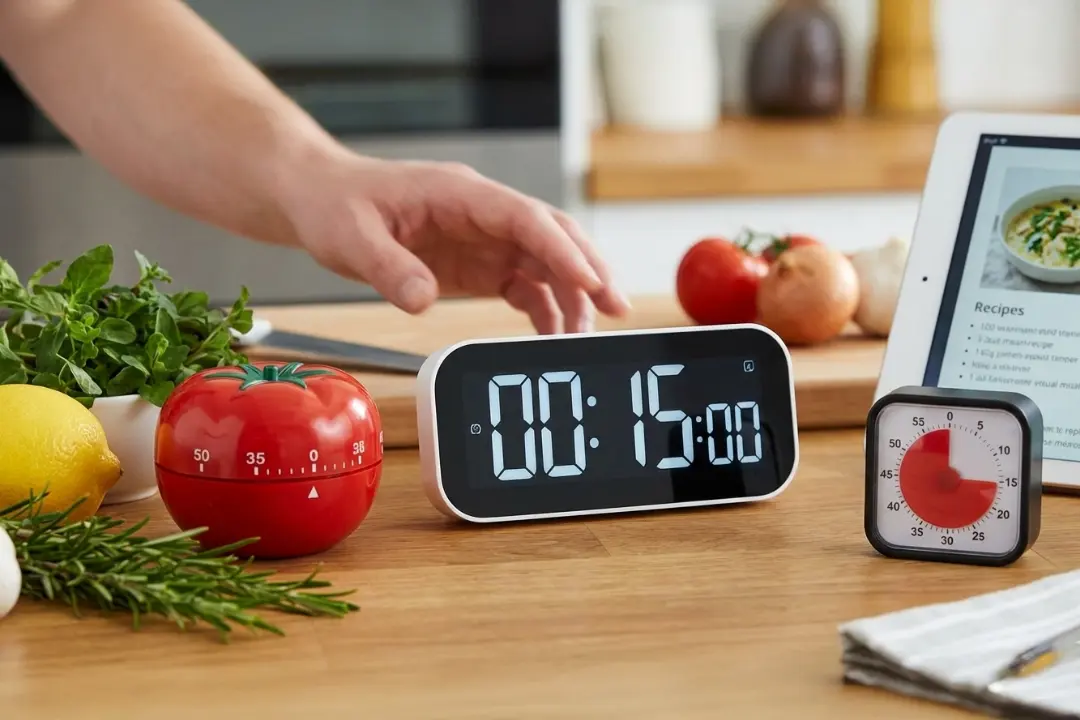
In the age of AI-integrated ovens and smart refrigerators, a dedicated kitchen timer remains an essential pillar of the modern countertop. We’ve all faced the dilemma: your hands are covered in flour, the pasta is seconds from becoming mush, and your $1,000 smartphone refuses to unlock because it doesn’t recognize you in a chef’s hat.
While smartphones offer versatility, they fail as dedicated culinary companions. Between “phone grime” cross-contamination risks and constant notifications that break your creative flow, a physical timer is your secret weapon for consistency. This guide explores the premier budget-friendly kitchen timing tools of 2026, proving that professional results don’t require a premium investment.
1. Why Pro Cooks Ditch Smartphones for Dedicated Timers
As we move through 2026, the “Digital Detox” movement is surging in home kitchens. Seasoned cooks are realizing that bringing a mobile device into the “splash zone” creates more problems than it solves.
- Superior Kitchen Hygiene: Research from the Global Food Safety Initiative confirms that mobile devices harbor significantly more pathogens than common household surfaces. Using a dedicated timer eliminates the need to touch high-bacteria screens while handling raw ingredients.
- Undistracted Flow State: Cooking requires rhythm. A physical timer ensures you won’t lose your place in a Modern Mexican Recipe because of a stray email or social media alert.
- Unbeatable Battery Life: While phones drain rapidly, a battery-free mechanical timer or a high-efficiency digital model can function for years without a recharge.
2. Digital vs. Mechanical: Matching a Tool to Your Cooking Style
Your choice of timer depends on how you interact with your environment. Identifying your “culinary personality” helps you select the right category.
High-Precision Digital Timers
Digital models serve as the gold standard for bakers and espresso enthusiasts. In 2026, even budget models under $15 deliver features once exclusive to professional laboratories.
- The Edge: Precise quartz oscillators provide to-the-second accuracy.
- Key Features: Look for memory functions and “silent/flash” modes, which are essential for small kitchen organization.
Tactile Mechanical (Wind-Up) Timers
The analog revival is in full swing. Mechanical timers win on durability and simplicity.
- The Edge: These tools require zero batteries and offer a nostalgic “ding” that cuts through the noise of a busy household.
- Sustainability: Learn more about the environmental impact of battery-free gadgets at Earth911.
3. Top 5 Budget-Friendly Timing Tools (2026 Rankings)
We’ve analyzed consumer sentiment and Technical SEO performance to identify these top-tier values.
| Model | Category | Standout Feature | Why It Ranks |
| Antonki 2-Pack | Best Value | Dual-Unit Bundle | Get two reliable units for under $12; ideal for home and office use. |
| ThermoPro TM03 | Best Multi-Tasker | Dual-Event Display | Tracks two dishes simultaneously with a 105 dB alarm. |
| Secura Visual | Best for ADHD | Vanishing Color Disk | Effectively manages “time blindness” with visual cues. |
| LAOPAO Retro | Best Durability | Stainless Steel Build | A magnetic, battery-free beast found on Amazon Kitchen (External). |
| Mainstays Digital | Best Ultra-Budget | 3-Button Interface | Simple, effective, and usually under $8 at major retailers. |
4. Essential Features to Prioritize Before You Buy
Don’t let a low price tag distract you from functionality. Ensure your budget-friendly kitchen timing tools meet these 2026 standards:
- Adjustable Alarm Volume: Modern homes need “High/Low/Mute” options. Explore noise-canceling kitchen design for more on acoustic management.
- Mounting Versatility: A powerful magnetic back is mandatory, but look for kickstands for use on granite or marble countertops.
- Display Clarity: High-contrast LCDs or large bold numbers ensure you can read the time from across the room. Check The Spruce Eats for readability benchmarks.
- Splash Resistance: Seek out seamless button designs that prevent flour and grease from clogging the internal circuitry.
5. Creative Uses: From the Stove to the Study
In 2026, these tools have moved beyond boiling eggs to managing life rhythms:
- The Pomodoro Technique: Enhance your work-from-home productivity by setting 25-minute focus intervals.
- Screen Time Boundaries: Use a visual timer to help children transition away from tablets—a technique often discussed in modern parenting blogs.
- Meditation Support: Use the rhythmic “tick” of an analog timer to ground your daily mindfulness practice.
Frequently Asked Questions (FAQs)
Q: Are digital timers truly more accurate than mechanical ones?
A: Yes. Digital timers utilize quartz oscillators for flawless precision. Mechanical models rely on physical springs, which may vary by 10–20 seconds over long durations.
Q: What is the best timer for managing ADHD symptoms?
A: Visual timers are the gold standard. By turning the abstract concept of time into a disappearing colored disk, they help users visualize the remaining time and reduce anxiety.
Q: How can I clean my kitchen timer without breaking it?
A: Never submerge digital tools. Wipe the exterior with a damp microfiber cloth and a mild detergent. For mechanical timers, a quick wipe with a disinfectant to remove kitchen grease is sufficient. Learn more about gadget maintenance.
Precision is the Secret Ingredient
A reliable timing tool is the most affordable insurance policy for your culinary creations. Whether you’re perfecting a 3-minute egg or a 24-hour slow-roast, the right tool keeps you in control.
Ready to master your kitchen? Subscribe to our newsletter for more SEO-optimized cooking guides or share this article with a fellow home chef!