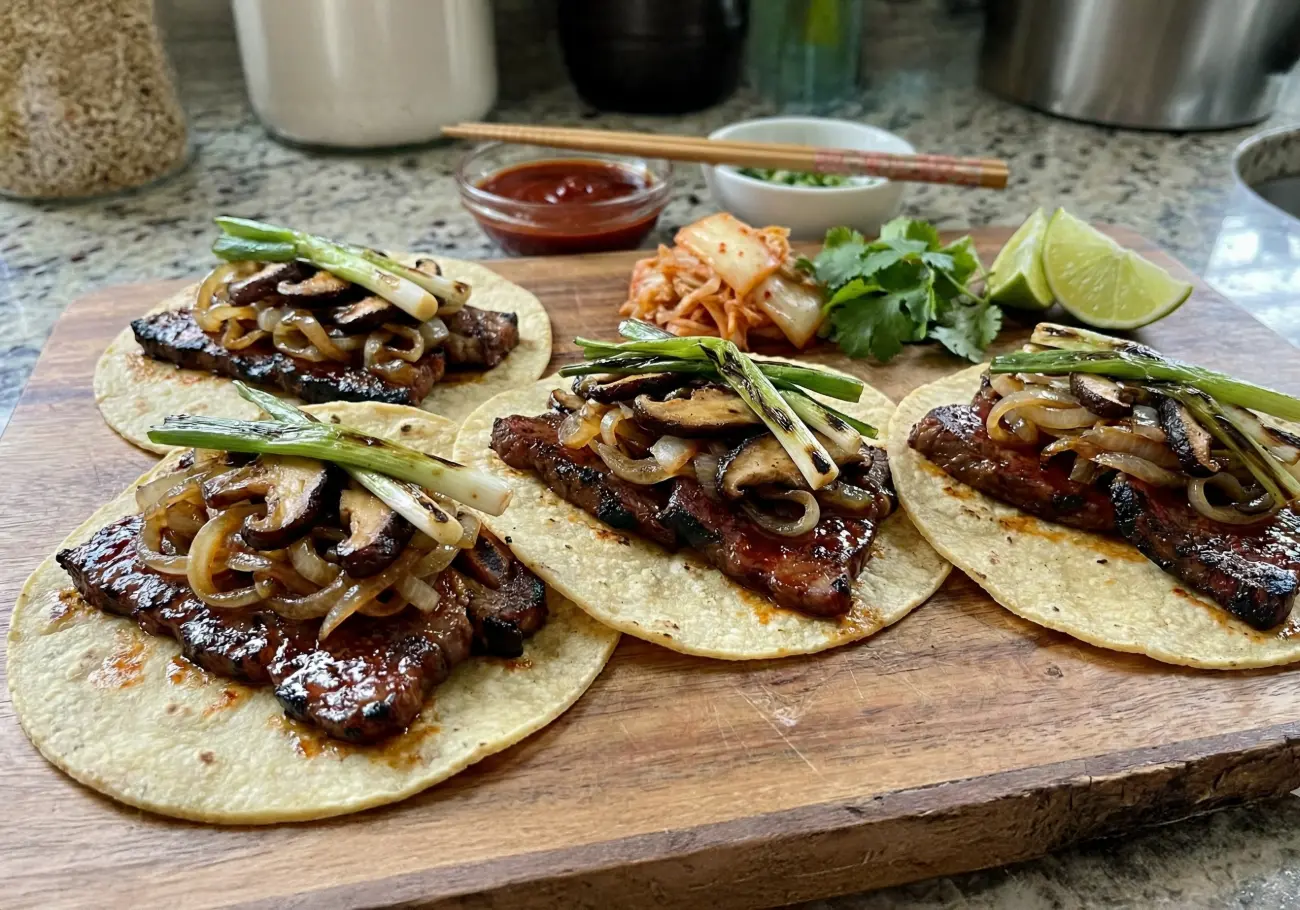
On Hand-Pressed Nixtamalized Corn Tortillas
This dish is a study in contrasts: the heat and fermentation of Korean chili paste (gochujang), the fatty richness of flanken-style short ribs, and the earthy, floral aroma of a fresh corn tortilla. We avoid the common mistake of “mushy” toppings by sautéing each vegetable individually, ensuring every bite has a distinct structural integrity.
Per 2 Tacos
The Science of Flavor Layering
In culinary science, we aim for a "360-degree palate."
1. The Base (Earthy): The nixtamalization process (soaking corn in an alkaline solution) unlocks niacin and creates a distinct "toasty" flavor that anchors the dish.
2. The Heart (Umami/Fat): Short ribs provide the fat, while the fermentation in the gochujang provides the glutamate (umami) that triggers the savory receptors.
3. The Contrast (Acid/Texture): By sautéing vegetables separately, we prevent "flavor bleeding." The onions retain their sweetness, the mushrooms their earthy snap, and the scallions their sharp bite. This prevents the dish from tasting like a singular, muddy stew.
1. The Marinade (The Enzyme Phase)Whisk together the gochujang, soy sauce, sesame oil, sugar/pear, garlic, and ginger. Coat the short ribs thoroughly.Chef’s Tip: If using Asian pear, the enzyme calpain will begin breaking down the beef proteins. Marinate for at least 30 minutes, but no more than 4 hours, or the meat will lose its "chew."
2. Individual Vegetable Sauté (The Texture Phase)To achieve "Perfect Texture," we must respect the different water contents of our vegetables. Use a heavy cast-iron skillet over medium-high heat.
- The Onions: Sauté with a pinch of salt until translucent and slightly charred on the edges. Remove from pan.
- The Mushrooms: Wipe the pan, add a drop of oil, and sear the shiitakes. Do not crowd the pan; we want a sear, not a steam. Remove once golden.
- The Scallions: Flash-sear these for only 30 seconds. We want to remove the raw "sulfuric" bite while keeping them bright green and crunchy.
3. The Protein (The Maillard Phase)Clean the skillet and bring it to high heat. Sear the short ribs for 2–3 minutes per side. The sugars in the gochujang will caramelize quickly—this is the Maillard reaction at work. Look for a dark, "lacquered" crust. Rest the meat for 3 minutes before slicing into bite-sized pieces.
4. The AssemblyWarm the nixtamalized tortillas until pliable. Layer the sliced short rib first, followed by a neat arrangement of the individually sautéed onions, mushrooms, and scallions. Finish with a squeeze of lime to provide the acid needed to "cut" through the fat.