
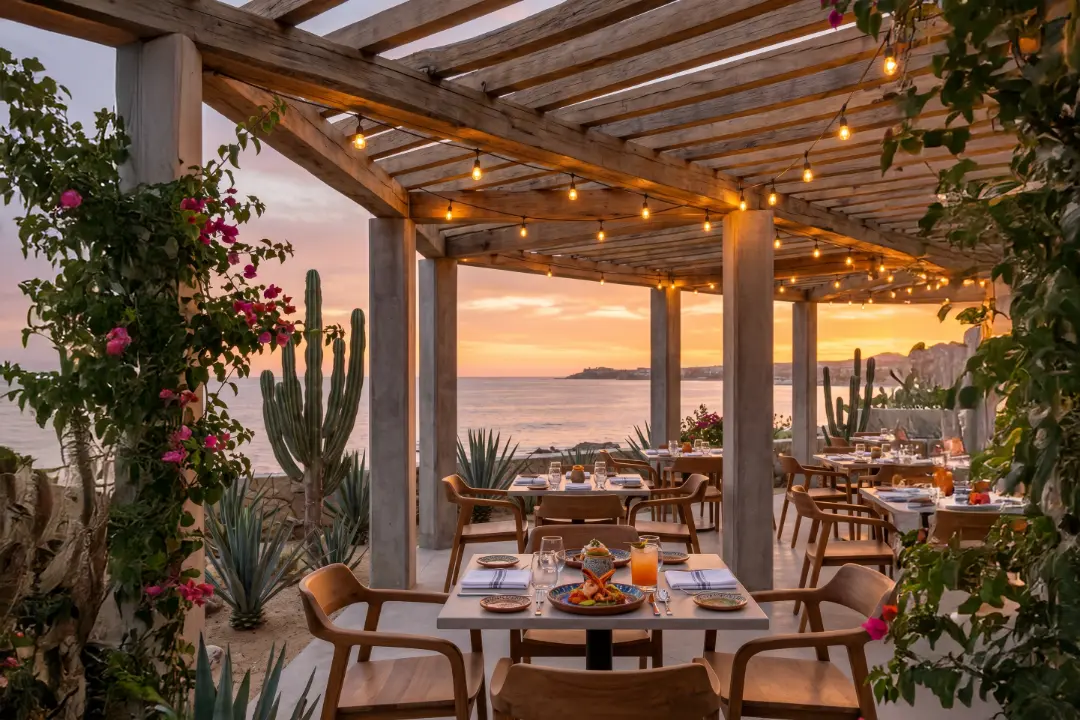
The Los Cabos gastronomic corridor, stretching from the vibrant marina of Cabo San Lucas to the bohemian Art District in San José del Cabo, is the undisputed epicenter of haute cuisine and luxury tourism in Mexico. Boasting a historic influx of over 3.8 million annual visitors and a hotel Average Daily Rate (ADR) hovering around $440 USD—the highest in the country—economic spillover outside of resorts represents an extraordinarily lucrative opportunity for hospitality investors, according to data from the Los Cabos Tourism Board.
However, entering the culinary market of Baja California Sur demands surgical precision. Navigating strict regulations across three levels of government, high commercial real estate costs, and the unique logistics of operating on a peninsula requires a flawless, data-driven strategy.
This practical guide provides a strategic, financial, and regulatory roadmap to build a profitable business in Mexico’s premium destination. If you are planning your commercial launch, we highly recommend reading our foundational article on commercial real estate investment strategies in BCS first to fully understand the local property landscape.
1. Commercial Zones in Los Cabos: Finding the Right Location
Your choice of location dictates your restaurant’s ultimate success. Los Cabos features three distinct micro-markets, each presenting unique diner profiles, consumer behaviors, and commercial lease costs.
Cabo San Lucas (Marina and Downtown): High Turnover and Volume
This zone serves as the primary engine for mass tourism, nightlife, and high-energy entertainment. Cruise ship passengers, mega-yacht crews, and travelers looking for constant activity all converge here.
- Diner Profile: Primarily North American, transactional, and seeking vibrant experiences, premium mixology, and fresh seafood.
- Ideal Concepts: High-volume seafood, fusion cuisine, beach clubs, and concepts paired with live music or high-energy entertainment.
- Commercial Property Rentals: High demand. Lease agreements are usually priced in U.S. dollars and require significant deposits, but they guarantee unmatched foot traffic. For this high-volume profile, optimizing your digital visibility is critical; learn how to achieve this in our comprehensive guide on local SEO for tourism businesses.
San José del Cabo (Art District): Silent Luxury and High Average Check
San José del Cabo offers a relaxed, colonial, and culturally rich atmosphere. The heart of this area is its famous Art Walk, which draws a mature, sophisticated traveler profile. You can check the official schedule of cultural events directly on the municipal website of the Ayuntamiento de Los Cabos.
- Diner Profile: High-net-worth travelers, art collectors, and expat residents living in ultra-exclusive communities.
- Ideal Concepts: Chef-driven concepts, contemporary Mexican cuisine, boutique dining experiences, and specialty bars.
- Commercial Property Rentals: Historic estates featuring magical interior courtyards. The primary technical challenge here involves adapting industrial kitchens while strictly respecting the town’s historic preservation guidelines.
The Tourist Corridor: Destination Dining and Ultra-Luxury
The four-lane highway connecting both towns is flanked by world-renowned ultra-luxury resorts and residential developments like Chileno Bay, Palmilla, and Querencia.
- Diner Profile: Guests staying in multi-million dollar luxury villas and golf community residents seeking absolute privacy.
- Ideal Concepts: High-end destination dining and signature restaurants seamlessly integrated into the desert or coastal landscape.
- Commercial Property Rentals: Premium commercial plazas or integrated master-planned developments. While rental costs are steep, the high average check thoroughly mitigates the initial investment.
2. Restaurant Permits in Los Cabos: The Regulatory Path
The most challenging barrier to entry is managing the red tape. To prevent costly delays that could freeze your capital for months, you must process permits in this strict legal and chronological order:
[1. Articles of Incorporation & SAT] ──> [2. Land Use Permit] ──> [3. Civil Protection & Ecology] ──> [4. COFEPRIS] ──> [5. Liquor License]
- Articles of Incorporation and Tax Registration (SAT – Federal Level): Define your legal entity (typically an S.A. de C.V. or S.A.P.I. de C.V.). This step is mandatory to formalize foreign investment, obtain your corporate tax ID (RFC), and sign tax-deductible lease agreements. Review the registration requirements on the official SAT portal.
- Commercial Land Use Permit (Dictamen de Uso de Suelo – Municipal Level): Processed through the Los Cabos General Directorate of Planning and Urban Development. This document certifies that the property is legally zoned for restaurant operations.
- Civil Protection and Ecology Approvals (Municipal Level): Civil Protection inspects commercial kitchen fire suppression systems, emergency signage, and LP gas installation safety certificates. You can review national safety standards on the Ministry of Labor and Social Welfare portal via Gob.mx. Concurrently, the Ecology Department monitors the mandatory installation of certified grease traps and verifies haulage contracts with authorized special-management waste collectors.
- Sanitary Operating Notice (COFEPRIS – State Level): Validates hygienic conditions in food preparation areas, pest control protocols, and water potability. This process is completed through the Baja California Sur Ministry of Health.
- Business Operation License and Liquor License (Municipal Level): The liquor license in Baja California Sur is the most heavily regulated asset. The process requires formal approval from the Los Cabos City Council (Cabildo) and is subject to a mandatory annual renewal. If you need local legal assistance, consult our technical breakdown on corporate government paperwork in BCS.
3. Financial Projections: Cost to Open a Business in Cabo San Lucas and San José del Cabo
Capital Expenditure (CapEx) for installation and Operational Expenditure (OpEx) differ considerably from mainland Mexico due to the peninsula’s geographic isolation.
Capital Expenditure (CapEx)
- Leasing: Commercial landlords in prime tourist zones typically demand 2 to 3 months of rent as a security deposit. Rent-free grace periods for remodeling are negotiable but rarely exceed 60 days.
- Industrial Equipment: The extreme climate of Los Cabos (high summer temperatures and marine salinity) demands commercial kitchens built with high-grade stainless steel (304 gauge). Furthermore, commercial HVAC air conditioning systems for the dining room are non-negotiable and can represent up to 25% of your total equipment budget.
- Logistics: Most designer furniture and industrial kitchen hardware must be freighted over land from central Mexico or imported directly from the U.S., significantly increasing shipping costs and lead times.
Monthly Operational Expenditure (OpEx)
- Electricity: Commercial electricity tariffs from the Comisión Federal de Electricidad (CFE) on the peninsula skyrocket during summer months due to the heavy, continuous use of air conditioning. We highly recommend implementing bioclimatic architecture strategies to reduce energy costs right from the initial architectural design phase.
- Human Talent: The hospitality workforce in Los Cabos is highly skilled and predominantly bilingual. Retaining professional line cooks, captains, and bartenders requires competitive base salaries paired with excellent tip-pooling structures.
4. Sustainable Gastronomy: The Michelin Guide Effect on the Region
High-end diners increasingly demand authenticity and environmental accountability. This trend solidified with the arrival of the MICHELIN Guide in Mexico, which awarded the prestigious MICHELIN Green Star to regional farm-to-table pioneers in San José del Cabo like Flora’s Field Kitchen and Acre, a milestone celebrated by CANIRAC.
To compete at this level, your business model should integrate:
- Product Traceability (Farm-to-Table): Forging direct partnerships with local organic farms in Miraflores, Santiago, or Todos Santos to source seasonal produce. Learn more about this movement in our article on urban farming and desert agriculture in BCS.
- Sustainable Sourcing: Purchasing seafood directly from local fishing cooperatives utilizing selective, eco-friendly fishing methods in the Sea of Cortez.
- Bioclimatic Architecture: Incorporating local wood pergolas, traditional palapas, and cross-ventilation into your restaurant design to mitigate solar heat gain and optimize energy consumption.
5. Restaurant Marketing in Los Cabos: Strategic Local SEO
To capture a tourist’s search intent the moment they land at the airport, your digital marketing must dominate two critical channels:
Google Business Profile Optimization (Local SEO)
Cuando un viajero busca “best restaurants near me” o “seafood Cabo San Lucas” en Google Maps, tu restaurante debe aparecer en el Local Pack.
- Keep your listing verified and fully updated.
- Upload your menu showing prices in both Mexican Pesos and U.S. Dollars.
- Synchronize direct booking links through global reservation engines like OpenTable.
Reputation Management on English-Language Platforms
For the North American market, online reviews dictate dining decisions. Implement a front-of-house protocol to encourage satisfied diners to leave specific reviews highlighting key signature dishes and service staff names on platforms like TripAdvisor and Yelp. Discover more promotional tactics in our guide on content marketing for the hospitality sector.
6. Frequently Asked Questions (FAQ)
How long does it take to process all restaurant permits in Los Cabos?
On average, the complete timeline from incorporating the company to obtaining your final Business Operation License takes between 4 and 6 months. If your project requires a brand-new liquor license, the total timeframe depends on the City Council’s voting sessions; therefore, we recommend starting your legal and real estate due diligence well in advance.
Can a foreigner fully own and operate a restaurant in the region?
Yes. Mexican corporate law allows foreign citizens to own 100% of the shares of a Mexican corporation. However, to actively work in the day-to-day operations inside the establishment, you must obtain a resident visa with work authorization from the National Migration Institute (INM).
How are liquor license costs calculated in Baja California Sur?
The issuance cost varies annually based on the current Municipality of Los Cabos Revenue Law and the specific commercial activity of the business. A Restaurant-Bar permit (where alcohol sales complement food consumption) is substantially more affordable and easier to clear through the City Council than a standalone Bar or Nightclub license.
What specific environmental regulations does Los Cabos enforce?
The Municipal Ecology Department strictly mandates the installation of efficient, certified grease traps in all dishwashing and food preparation stations. Furthermore, you must present an active service contract with a government-authorized waste management company to handle special-management waste, ensuring that kitchen grease and organic waste never enter the public sewage system.
Build a Profitable Gastronomic Legacy
Opening a restaurant in Los Cabos is a top-tier business challenge, but the financial returns and brand equity gained from thriving in Mexico’s premier luxury destination thoroughly reward the learning curve. The keys to success lie in rigorous financial planning, absolute compliance with local regulations, and a culinary identity that respects the local environment.
Ready to launch your culinary project in Los Cabos?
Avoid costly layout and planning errors. Download our Los Cabos Regulatory and Real Estate Checklist or book a commercial consulting session with our local market specialists today.