
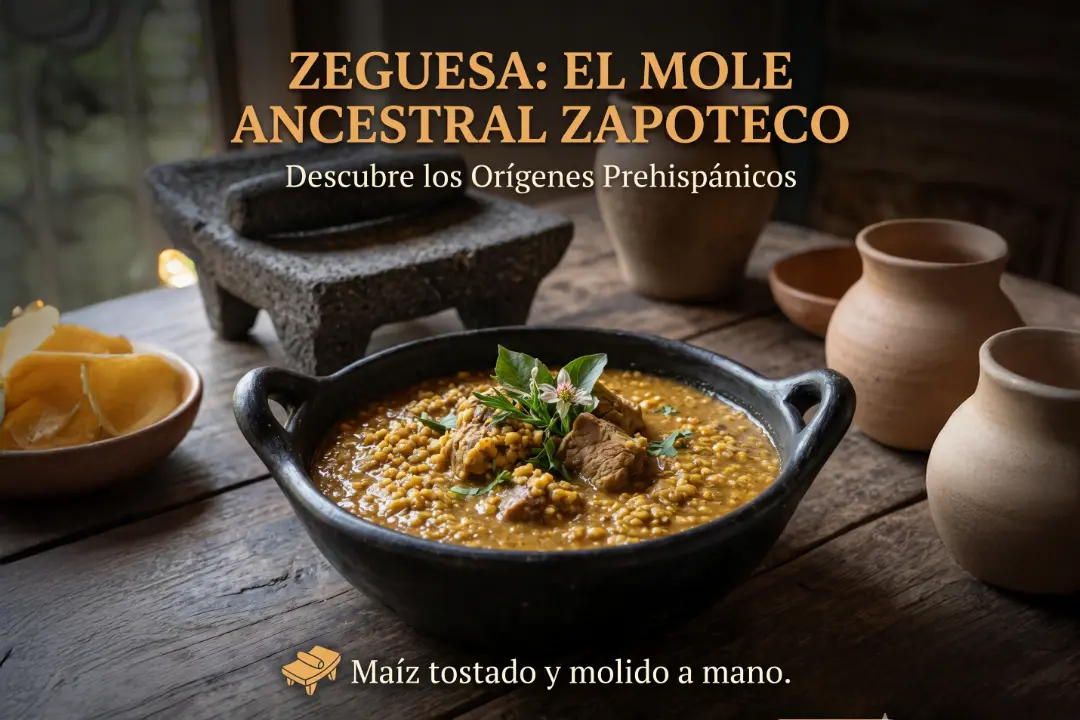
Before colonial spices, almonds, and chocolate arrived in the Americas, Mesoamerican cooks had already mastered the complex culinary art of the mōlli. When tracing Mexico’s deeply rooted gastronomic history, we inevitably uncover the Pre-Hispanic origins: The history of the zeguesa (or zeguiza) as an ancient Zapotec mole made from toasted and ground corn.
This rustic, time-honored dish offers a direct link to indigenous foodways that thrived thousands of years ago in the Central Valleys of Oaxaca. In this comprehensive guide, we explore the archaeological roots, traditional preparation methods, and the enduring cultural significance of zeguesa in modern Zapotec communities.
What is Zeguesa? Inside the Ancient Zapotec Corn Mole
When modern food lovers think of mole, they typically envision luxurious, dark sauces made with up to forty ingredients, including sesame seeds, plantains, refined sugar, and chocolate. However, to truly understand the roots of Oaxaca’s rich culinary landscape, we must examine zeguesa (frequently spelled zeguiza, seguisa, or segueza).
Zeguesa is a hearty, pre-Hispanic stew native to the Central Valleys of Oaxaca. What sets it apart from the seven famous moles of Oaxaca is its defining thickener: maíz amarillo tostado y quebrajado (toasted and cracked yellow corn). Instead of relying on bread, nuts, or seeds to give the sauce its body, ancient cooks used deeply toasted corn to create a thick, slightly granular texture that remains both satisfying and highly aromatic.
The Ancestral Flavor Profile
The flavor of this ancient Zapotec mole is earthy, nutty, and subtly herbaceous. Zapotec cooks built the base using a few native ingredients readily available in Mesoamerican gastronomy:
- The Chiles: Dried chiles such as guajillo, ancho, and occasionally the rare chilhuacle provides a deep, fruity, and mildly spicy backbone.
- The Aromatics: Indigenous tomatoes form the liquid base (cooks integrate garlic much later, during the colonial era).
- The Herbs: Cooks add fresh hoja santa (anise-flavored leaf) or pitiona (a pungent, minty herb) at the end of the cooking process to impart a distinctly Oaxacan aroma.
According to culinary authorities like the Larousse Diccionario Enciclopédico de la Gastronomía Mexicana, the toasted and ground corn not only thickens the broth but also acts as a natural flavor enhancer, giving the dish a roasted, popcorn-like scent that perfumes the entire kitchen.
Unearthing Pre-Hispanic Origins: The Mōlli of Monte Albán
To truly appreciate the history of Zeguesa, we must look to the linguistic and archaeological records of ancient Mexico.
The word “mole” derives from the Nahuatl language word “mōlli,” which translates to “sauce,” “concoction,” or a mixture ground on a stone. Long before the Spanish conquest, the indigenous peoples of Mexico lacked access to domesticated pigs, chickens, or cattle. Because they relied on wild game, early cooks served authentic, ancient zeguesa alongside venison, wild rabbit, or native turkey (guajolote).
The Technology of the Metate
The true technological genius of the Zapotec diet lay in their intensive grinding techniques. Archaeological excavations conducted at Monte Albán, the ancient Zapotec capital, have uncovered ceramic vessels containing food residues dating back to at least 200 BCE.
Researchers from the Instituto Nacional de Antropología e Historia (INAH) show that ancient cooks roasted chiles, seeds, and maize, meticulously grinding them by hand on a volcanic stone metate. By reducing dry ingredients into a rustic paste and dissolving them in water or wild game broth, they maximized their communities’ caloric intake. Because it relies entirely on these native Mesoamerican thickening techniques, zeguesa represents an unbroken lineage to the pre-Hispanic diet.
(For more on ancestral instruments, read our guide to traditional Mexican cooking tools.)
Zeguesa vs. Modern Oaxacan Moles: A Culinary Evolution
To understand how unique zeguesa truly is, we must compare it to the modern moles that dominate Oaxacan cuisine today. When the Spanish arrived, they brought a wave of new ingredients: wheat, almonds, cinnamon, cloves, black pepper, and livestock. Convent nuns and mestizo cooks quickly began blending these old-world ingredients with native mōlli techniques, resulting in the complex fusion sauces we recognize today.
Zeguesa, however, resisted this European fusion. It proudly retained its original Mesoamerican identity.
| Feature | Zeguesa (Zeguiza) | Modern Mole Negro |
| Era of Origin | Pre-Hispanic (Mesoamerican) | Colonial Era (Mestizo Fusion) |
| Primary Thickener | Toasted, cracked yellow corn | Bread, plantains, nuts, and seeds |
| Key Flavor Profile | Earthy, roasted corn, herbaceous | Sweet, spicy, chocolate, warm spices |
| Texture | Rustic, hearty, slightly grainy | Smooth, velvety, highly refined |
| Traditional Protein | Venison, wild turkey, rabbit | Chicken, pork |
This comparison highlights why culinary anthropologists prize zeguesa so highly. While modern moles are velvety and smooth, Zeguesa proudly displays its rugged, agrarian roots.
The Labor of Love: Traditional Preparation
Crafting an authentic zeguesa mole requires physical endurance, patience, and a deep understanding of fire and stone. If you browse our authentic Mexican recipe collection, you will see that traditional Zapotec cooks never rush this labor-intensive process:
- Toast the Dried Corn: Cooks spread dried yellow corn kernels on a clay comal over a wood fire. They stir the kernels constantly with a wooden paddle so they toast evenly without burning. As they heat, the kernels pop, releasing a rich, nutty aroma.
- Grind the Corn on the Metate: Once cooled, cooks grind the toasted corn on a volcanic stone metate. They do not aim to create a fine powder, but rather a coarse, cracked texture—similar to thick grits. This martajado texture defines the signature mouthfeel of zeguesa.
- Prepare the Chile Base: Cooks lightly toast dried guajillo and ancho chiles, rehydrate them in hot water, and grind them together with native tomatoes to create a vibrant red paste. They strain this paste to remove any tough skins.
- Simmer the Broth and Meat: Cooks boil pork spine (espinazo de puerco) or chicken slowly to create a rich stock. Once the meat nearly finishes cooking, they fold the red chile paste into the boiling broth.
- Incorporate the Corn and Herbs: Cooks slowly pour the coarse, toasted corn into the simmering, spicy broth, stirring constantly. As the corn cooks, it swells and thickens the stew. In the final minutes, cooks submerge fresh hoja santa leaves into the pot to perfume the mole.
Cultural Significance in Modern Zapotec Villages
Today, the history of the zeguesa is a living, breathing tradition in the Central Valleys of Oaxaca. You will rarely find families eating zeguesa on a casual weekday. Instead, communities classify it as a mole de fiesta—one of the premier celebratory Mexican dishes reserved for major life events, weddings, christenings, and patron saint festivities.
The Connection to the Agricultural Cycle
Zeguesa ties intimately to the land and the traditional milpa farming system. During la pisca (the corn harvest), farmers gather to help one another bring in the crops. To honor this communal labor, the host family prepares massive clay pots of zeguesa. Because cracked corn entirely thickens the mole, it provides immense satiety and slow-burning energy, making it the perfect meal to sustain hard agricultural work.
In Zapotec strongholds like the rug-weaving village of Teotitlán del Valle, cooks fiercely guard these ancestral recipes. Renowned indigenous chefs, such as Abigail Mendoza, have dedicated their lives to ensuring that modern blenders do not replace the labor-intensive art of hand-grinding toasted corn on the metate. Through their passionate efforts, Zeguesa remains a powerful, delicious symbol of indigenous resilience.
Preserving the Taste of Mesoamerica (Conclusion)
By understanding its pre-Hispanic origins, we gain a profound appreciation for the ingenuity of ancient Zapotec cooks. They transformed simple dried corn, wild chiles, and aromatic leaves into a culinary masterpiece that has survived for millennia.
Eating zeguesa is an act of historical communion. It reminds us that before European spices ever reached the Americas, Mexican cuisine was already deeply complex, nourishing, and inextricably rooted in the earth. If you want to taste history, step outside the bustling city centers and book one of the many culinary tours in southern Mexico to experience a bowl of authentic, hand-ground zeguesa for yourself.
Frequently Asked Questions (FAQs)
1. Is Zeguesa spicy?
No, Zeguesa is generally mild. While it uses dried chiles like guajillo and ancho, cooks utilize these varieties more for their deep, earthy, and fruity flavors rather than intense heat. The prominent flavor is the comforting, nutty taste of roasted corn.
2. Can I make Zeguesa at home without a volcanic stone metate?
Yes, though the texture will differ slightly. You can toast dried yellow corn in a dry skillet and pulse it in a heavy-duty food processor or a spice grinder until it reaches a coarse, cracked consistency (similar to polenta or coarse grits). Avoid grinding it into a fine flour.
3. What is the main difference between zeguesa and mole negro?
The primary difference lies in the thickening agent and ingredient list. Zeguesa is a pre-Hispanic recipe thickened exclusively with toasted, cracked corn and uses no old-world spices. Mole negro is a complex, colonial-era fusion dish thickened with bread and nuts, featuring ingredients like chocolate, cinnamon, and sesame seeds.
4. Where can I try authentic zeguesa in Mexico?
Because zeguesa is a labor-intensive festival dish, it is rarely found in casual tourist restaurants. Your best option is to visit traditional dining rooms in Zapotec weaving villages like Teotitlán del Valle (such as the famous Tlamanalli restaurant) or look for it during the annual Festival de los Moles in Oaxaca City every July.
Here is a complete set of SEO metadata for your article, optimized to attract readers, rank well on search engines, and drive click-throughs.