
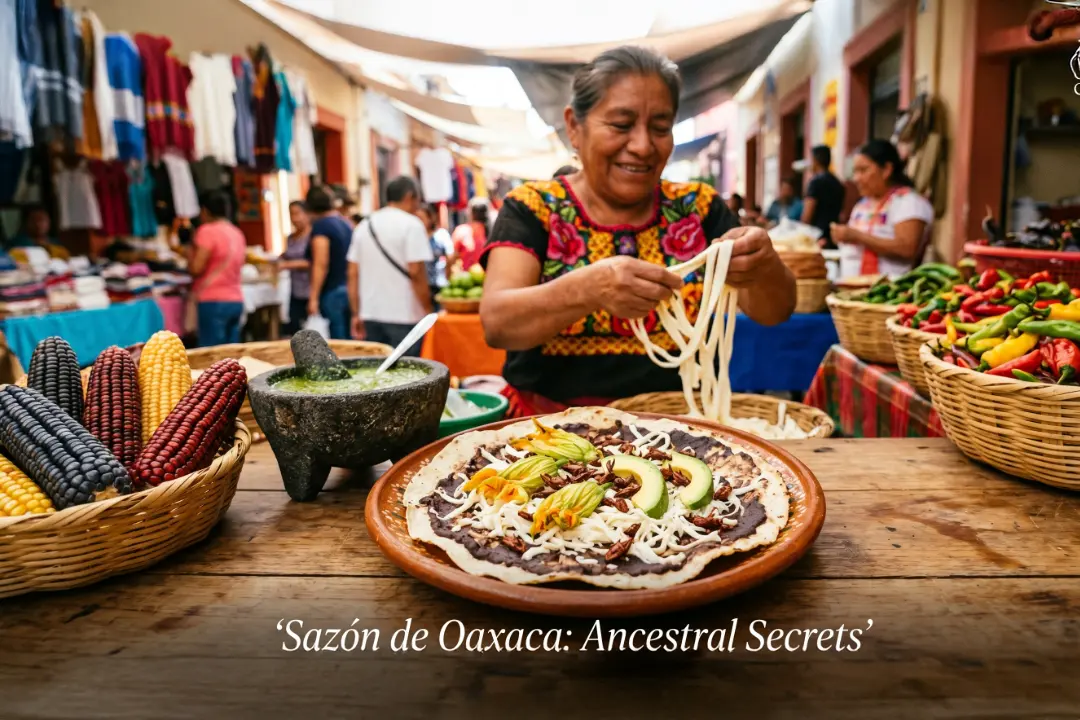
For decades, global food media has romanticized Oaxaca as a colorful, frozen-in-time kitchen. Travelers arrive seeking a postcard: an elderly woman patting out tortillas over a clay flame, or a market stall overflowing with dark, glossy sauces. But treating this region as a static museum piece misses the true engine of its greatness. Oaxaca’s rich culinary landscape is not a historical artifact preserved for tourists. It is a living, breathing socio-ecological infrastructure.
From the 9,000-year-old genetic lineage of heirloom corn to the intricate, hyper-regional sauce architectures passing through generational hands, Oaxaca’s gastronomy functions as an active form of cultural resistance and biodiversity preservation. It is a system built on “sazón”—a Spanish term that translates loosely to “seasoning” but in Oaxaca represents a profound, collective mastery of flavor, environment, and community.
To experience the true Oaxaca ancestral food experience, one must look past the plate and examine the delicate, brilliant infrastructure that keeps this kitchen alive.
1. The Biochemistry of Native Corn: Nixtamalization and the Milpa Ecosystem
At the absolute foundation of Oaxaca’s gastronomy lies a plant system that is both an agricultural marvel and a biochemical triumph: the Milpa. Rather than planting rows of a single crop, Oaxacan farmers practice a thousands-of-years-old polyculture. Maize, climbing beans, squash, chiles, and wild edible greens called “quelites” grow together in a self-sustaining ecosystem.
This structural symbiosis preserves soil health without chemical fertilizers, creating a resilient agricultural shield across Oaxaca’s diverse microclimates. Archeological data from the Guilá Naquitz cave in the Central Valleys of Oaxaca proves that human beings have been domesticating these exact plant lineages for over 9,000 years. This ancient agricultural practice forms the backbone of the region’s food security, which you can read about in our comprehensive guide to Mesoamerican farming techniques.
But harvesting heirloom corn (maíz criollo) is only half the battle. Raw corn is largely indigestible to humans and lacks accessible nutrients. The ancient Mesoamericans solved this through a profound chemical process known as nixtamalization.
Raw Heirloom Corn Kernels
↓
Soaked & Cooked in Alkaline Solution (Water + Wood Ash or Cal/Calcium Hydroxide)
↓
Alkaline Environment Breaks Down Pericarp (Outer Hull)
↓
Unlocks Niacin (Vitamin B3) & Synthesizes Essential Amino Acids
↓
Washed & Ground into Nutritional, Pliable Masa
Without nixtamalization, a diet reliant solely on corn leads to pellagra, a severe vitamin deficiency disease. By cooking grain in an alkaline environment, ancient Oaxacans unlocked niacin (Vitamin B3), balanced amino acids, and bound dangerous fungal toxins.
Data published in nutritional journals by the National Institutes of Health (NIH) confirms that the traditional Oaxacan Milpa system provides over 60% to 70% of the daily adequate intake of complex carbohydrates, dietary fiber, and iron for rural communities.
The operational backbones of this system are the women-led neighborhood mills (molinos). Every morning before dawn, lines form at local molinos as women bring their nixtamalized corn to be ground into fresh, elastic masa. It is this community-level infrastructure that guarantees Oaxacan street food authenticity. When you bite into a street-side tetela (a triangular pocket of masa stuffed with beans), you are not tasting commercial corn flour; you are consuming an unbroken chain of biochemical heritage. For more on how this foundation shapes everyday snacks, explore our breakdown of the history of Mexican masa staples.
2. Architectural Gastronomy: A Structural Mapping of the 7 Traditional Moles of Oaxaca
If corn is the structural foundation of Oaxaca’s culinary landscape, then mole is its architectural crowning achievement. Too often, international travelers view mole as simply “chocolate sauce for meat.” In reality, mole is a fluid, hyper-complex emulsion that maps the ecological boundaries of Oaxaca’s regions.
The legendary 7 traditional moles of Oaxaca are explicitly linked to regional microclimates and endemic ingredients. The rare, smoky chilhuacle chile—essential for an authentic Mole Negro—grows almost exclusively in the dry, high-altitude microclimate of the Cañada region. If that chile’s cultivation fails due to climate shifts, the architectural integrity of the sauce changes completely. This delicate balance between climate and flavor is explored further in our regional guide to Mexican chiles.
To truly understand how these sauces differ, we must categorize them by their flavor philosophies and structural thickeners, rather than just their colors:
| Mole Type | Flavor Philosophy & Character | Secret or Defining Structural Ingredients | Traditional Pairing |
| Negro | Celebratory, dark, deeply complex, smoky-sweet | Hoja santa, charred chile seeds, rich cacao, chilhuacle chile, | Turkey or chicken |
| Coloradito | Sweet-savory bridge, approachable, medium-bodied | Ripe plantain, whole warm baking spices, Mexican chocolate | Enchiladas, pork |
| Amarillo | Comforting, fiery, curry-like, un-sweet | Excludes chocolate; relies on chile costeño & wild masa as a thickener | Beef or wild vegetables |
| Verde | Bright, herbaceous, sharply fresh, seasonal | Pumpkin seeds (pepitas), tomatillos, epazote, hoja santa | Pork or white fish |
| Chichilo | Intense, savory, slightly bitter undertones | Toasted avocado leaves and charred chile seeds, entirely no sugar | Braised beef brisket |
| Manchamanteles | Sweet-spicy, fruity, acidic balance | Fresh pineapple, sweet plantain, rendered chorizo fat | Pork or chicken |
| Rojo | Boldly spicy, sharp, highly versatile, nut-forward | Toasted red chiles, raisins, almonds, walnuts | Chicken or tamales |
Oaxacan cooks do not use commercial cornstarch to thicken these masterpieces. Instead, they use leftover tortillas, toasted pumpkin seeds, or raw masa dissolved directly into the simmering broth. Learn more about replicating these techniques at home with our step-by-step masterclass on sauce emulsions.
These sauces are so vital to the regional economy that annual cultural showcases, such as the Feria Internacional del Mezcal, serve as primary financial lifelines for local ingredient harvesters. These festivals connect small-scale indigenous farmers directly with global culinary tourism markets.
3. The Street vs. The Tasting Menu: The Evolution of Oaxacan Street Food Authenticity
Walk into the Mercado de Abastos or the legendary charcoal-smoke corridors of the Pasillo de Humo in the Mercado 20 de Noviembre, and you will find yourself at the epicenter of raw sensory infrastructure. Here, rows of vendors grill tasajo (thinly sliced beef), cecina (marinated pork), and chorizo over open hardwood coals.
The crown jewel of this street-level experience is the Tlayuda.
Anatomy of an Authentic Tlayuda: A large, thin, partially toasted corn tortilla spread with asiento (unrefined, seasoned pork lard), a thick layer of black bean paste fragranced with avocado leaves, a mountain of shredded quesillo, and topped with grilled meats.
According to consumer panel tracking data from food intelligence networks like Tastewise, sazón (as a standalone metric of flavor complexity) and the Tlayuda format have experienced a dramatic 20% year-over-year growth rate in global consumer menu interest. Travelers are moving away from heavily commercialized Tex-Mex options and demanding the uncompromised textures of authentic Oaxacan street food.
This surge in global interest has created a fascinating dialogue between traditional street vendors and fine dining establishments. In contemporary culinary hubs across the city, internationally acclaimed Oaxacan chefs translate these ancestral flavors into modern multi-course tasting menus.
- Casa Oaxaca: Chef Alejandro Ruiz elevates traditional table-side salsa making into a sensory performance, sourcing wild herbs directly from backyard gardens. Learn how to craft similar fresh salsas in our ultimate guide to table-side salsas.
- Origin: Chef Rodolfo Castellanos uses classical techniques to reframe coastal Oaxacan seafood and Mixtec ingredients.
- Labo Fermento: An avant-garde culinary laboratory blending ancestral Oaxacan ingredients with ancient Asian fermentation methods. Here, endemic Oaxacan chiles and heirloom corn are inoculated with koji molds to create hyper-local, deeply savory misos and shoyus.
This relationship is successful because it is symbiotic. The high-end restaurants do not look down on the street markets; instead, they source their ingredients from the exact same neighborhood vendors, ensuring that tourist dollars directly fund the preservation of local agricultural heritage.
4. The Craft Ecosystem of Quesillo: Tradition Under Structural Threat
You cannot discuss Oaxaca’s rich culinary landscape without addressing its famous string cheese, known locally as quesillo. Originating in the Etla Valley—specifically the community of Reyes Etla—authentic quesillo is a masterpiece of dairy craft.
The process requires high-quality, raw cow’s milk. Cultured milk is curdled, and then hot water is poured over the curds, a step that activates the proteins and allows the cheese to be stretched into long, ribbon-like strands before being wound tightly into a signature ball.
Artisanal Quesillo Value Chain:
[Raw Cow’s Milk] ➔ [Fermentation & Curdling] ➔ [Hot Water Stretching] ➔ [Hand-Winding Coils]
However, this traditional craft ecosystem is currently facing significant economic and structural threats. Industrial food corporations have flooded global supply chains with imitation products labeled as “Oaxaca Cheese.” These mass-produced alternatives swap raw milk for pasteurized skim components, vegetable fats, and heavy chemical stabilizers to mimic the cheese’s signature stretch while undercutting the prices of local artisans.
A comprehensive case study published in Frontiers in Sustainable Food Systems reveals the staggering human equity required to protect this foodway:
- National Volume Share: Authentic, artisanally produced quesillo accounts for roughly 10% of Mexico’s total national cheese production, moving approximately 40,778 tons annually.
- Generational Knowledge: Survey data within the study shows that over 96% of ‘artisan cheese makers’ in the Eteco Valley inherited their production techniques directly from their parents.
When consumers buy cheap, industrialized plastic-wrapped imitations, they aren’t just buying an inferior product; they are actively dismantling a generational economic system that supports thousands of small-scale Oaxacan dairy farmers.
5. Liquid Heritage: Agave Realism, Cacao Rituals, and Pre-Hispanic Hydration
To completely map Oaxaca’s food landscape, we must look at the ancestral liquids that fuel its people. While the global market has fallen deeply in love with mezcal, true agave realism requires looking past trendy tasting rooms to the village-level palenques (artisanal distilleries).
In these rural facilities, maestro mezcaleros roast agave hearts (piñas) in underground stone pits, crush them using massive stone tahona wheels pulled by horses, and ferment the juices naturally in open wooden vats using wild, airborne yeasts.
Distillation often occurs in small clay pots (ancestral mezcal), imparting an earthy, mineral-rich terroir that reflects the specific soil, water, and wild agave varieties—like tobalá or tepeztate—which can take up to 25 years to mature in the wild. For an in-depth look at how these techniques compare to other spirits, see our comprehensive guide to ancestral distillation.
But long before agave became an industrial commodity, cacao and corn dominated the liquid heritage of Oaxaca. Walk into any bustling morning market and you will see women whisking Tejate, a frothy, cold pre-Hispanic beverage traditionally known as the “drink of the gods.”
Tejate Ingredient Matrix:
[Toasted Maize] + [Fermented Cacao Beans] + [Mamey Fruit Pits (Pixtle)] + [Rosita de Cacao Flowers]
When ground together into a paste and slowly mixed with ice-cold water by hand, the fat from the rosita de cacao flower rises to the surface, creating a thick, velvety, cloud-like foam.
Beyond its cultural identity, traditional drinks like tejate perform a critical modern function: nutritional public health defense. Anthropological research published by the World Health Organization (WHO) detailing transnational food systems notes that traditional ancestral beverages offer profound satiety, complex carbohydrates, and anti-inflammatory properties.
In a country facing severe public health crises due to the introduction of high-fructose processed sodas, defending the daily consumption of tejate and hand-ground water-based hot chocolate is a vital strategy for physical and cultural survival.
Frequently Asked Questions (FAQ)
Why is Oaxaca considered the culinary heartland of Mexico?
Oaxaca’s status stems from its extraordinary geographical and cultural diversity. Separated by rugged mountain ranges, the state features eight distinct regions encompassing hundreds of microclimates. This isolation allowed 16 distinct indigenous groups to preserve their unique agricultural practices, languages, and culinary techniques, resulting in an unparalleled concentration of biodiversity and culinary knowledge.
What are the seven traditional moles of Oaxaca and how do they differ?
The seven traditional moles are Negro (dark, smoky-sweet); Coloradito (approachable, savory-sweet); Amarillo (fiery, yellow-orange, thickened with masa); Verde (herbaceous, fresh, using pumpkin seeds); Chichilo (savory, slightly bitter, using charred chile seeds); Manchamanteles (fruity, sweet-spicy with pineapple); and Rojo (boldly spicy and nut-forward). They differ based on the specific toasted chiles, herbs, and thickeners native to the regions where they were created.
How does the ancient process of nixtamalization change heirloom corn?
Nixtamalization involves soaking and cooking raw corn kernels in an alkaline solution of water and calcium hydroxide (lime) or wood ash. This process breaks down the tough outer hull of the kernel, making it soft enough to grind into a pliable dough (masa). Nutritionally, it unlocks Vitamin B3 (niacin), increases calcium absorption, balances amino acids, and eliminates dangerous molds, transforming a basic grain into a highly nutritious superfood.
Where can I find an authentic, non-performative food tour in Oaxaca?
Look for tours led by local, indigenous guides or culinary historians that emphasize direct economic support for neighborhood markets (Mercado de Abastos and Mercado de Tlacolula) and independent rural palenques. Avoid tours that only visit highly commercialized, tourist-heavy downtown restaurants, and instead opt for experiences that explicitly highlight ingredient provenance and support independent food producers.
Safeguarding the Future of the World’s Most Resilient Kitchen
Oaxaca’s rich culinary landscape survives because of direct human stewardship, community solidarity, and ecological biodiversity. It is an intricate web where the consumer, the chef, the artisanal cheesemaker, and the small-scale farmer are entirely dependent on one another. If we treat this cuisine merely as an exotic trend or a backdrop for social media, we threaten the very economic and environmental foundations that make it extraordinary.
Support the Living Kitchen of Oaxaca
The next time you travel to Oaxaca or dine at an authentic Oaxacan restaurant in your home city, choose to be an active participant in preserving this heritage. Seek out independent, heirloom-corn tortillerias. Buy your quesillo and crafts directly from generational marketplace vendors rather than commercial supermarkets. Support ethical mezcal labels that practice sustainable replanting initiatives for wild agaves.
By intentionally choosing where you spend your culinary dollars, you help safeguard the ancestral food systems, protect indigenous food sovereignty, and ensure that the living infrastructure of Sazón continues to feed the world for generations to come. Explore authentic culinary experiences, respect the hands that prepare your food, and taste the real soul of Mexico responsibly.