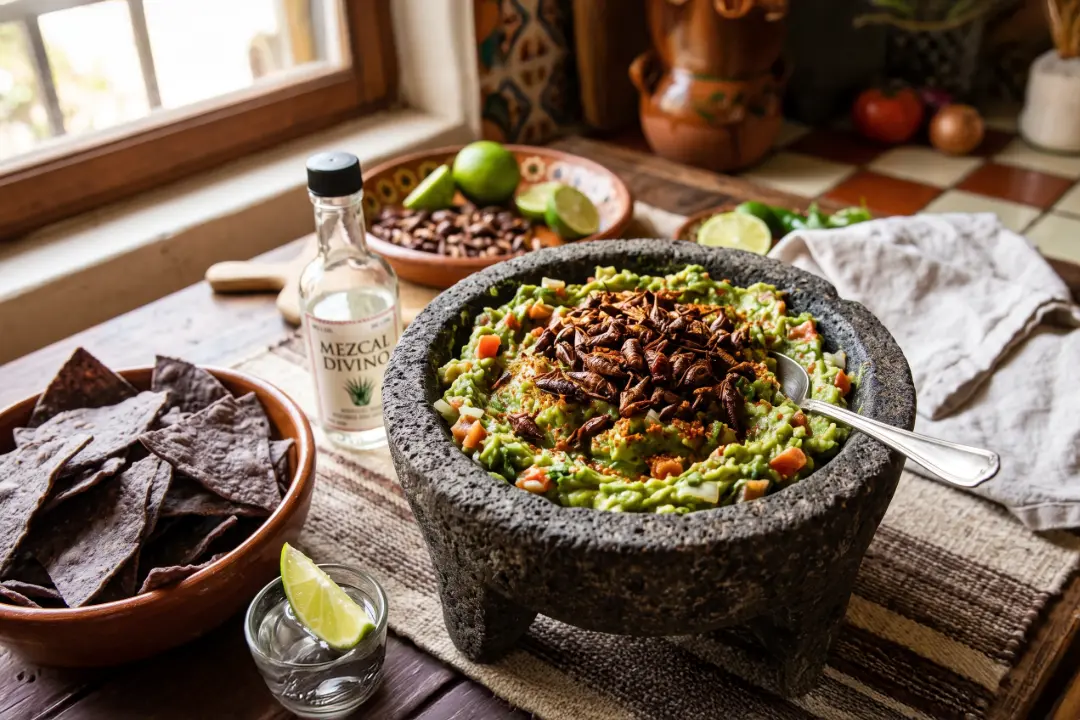
This is a master-class recipe designed to elevate a traditional Mesoamerican staple—Chapulines (Oaxacan toasted grasshoppers)—into a contemporary culinary experience.
By pairing the buttery, rich texture of fresh avocados with the intensely savory, citrusy, and nutty crunch of toasted crickets, you will create an appetizer that is both a conversation starter and a triumph of flavor balancing.
Recipe Overview
- Yield: Serves 4 to 6 people
- Prep Time: 15 minutes
- Cook Time: 10 minutes
- Total Estimated Time (ETA): 25 minutes
Ingredients
-
2 tbsp extra virgin olive oil (or avocado oil)
-
1/2 cup white onion, finely diced (divided)
-
1 serrano pepper, finely minced (seeds optional, for heat control)
-
1 clove garlic, microplaned or minced
-
1/2 cup Roma tomato, deseeded and finely diced (drain excess moisture)
-
3 large ripe Hass avocados
-
Juice of 1.5 fresh key limes (adjust to taste)
-
1/2 cup fresh cilantro leaves, finely chopped
-
1 tsp coarse sea salt (or to taste)
-
1/2 tsp freshly cracked black pepper
-
1/2 cup pre-toasted chapulines (Mexican crickets/grasshoppers)
-
1/4 tsp mild chili powder (such as Tajín or guajillo powder)
Nutrition
Protein
6 g
Total Fat
18 g
Saturated Fat
2.5 g
Carbohydrates
9 g
Dietary Fiber
6.5 g
Sugars
1.5 g
Sodium
390 mg
Calories
210 kcal
The Science of Flavor Layering
Great cooking relies on balancing the five primary tastes—fat/salt, acid, heat, and umami. In this recipe, we build layers sequentially so that no single element overpowers the delicate, nutty essence of the avocado:
1. The Fat & Salt Foundation: Avocados are rich in monounsaturated fats. Fat coats the palate, which can dull flavors if not properly balanced. Coarse sea salt acts as a flavor magnifier, drawing out the fruit's natural sweetness.
2. The Acid & Heat Counterbalance: Fresh lime juice introduces citric acid, which cuts through the heavy fat, brightens the palate, and prevents the avocado from oxidizing (browning). The capsaicin in the serrano pepper stimulates the warmth receptors on your tongue, accelerating the overall sensory experience.
3. The Sautéed Maillard Aromatics: Rather than folding raw, harsh onions and garlic directly into the mix, we sauté them separately. This coaxes out their natural sugars (caramelization) and reduces their sulfur compounds, transforming sharp bites into sweet, mellow hums.
4. The Umami-Texture Crown: Chapulines are packed with protein and chitin (their crunchy exoskeleton). Sautéing them concentrates their natural, earthy umami—reminiscent of dry-roasted shrimp and mushrooms—while creating a distinct, crisp mouthfeel that contrasts beautifully with the velvety avocado cream.
Step 1: Individual Vegetable SautéingTo prevent the vegetables from steaming together and becoming soggy, we sauté them sequentially in a single pan to build a complex, layered fond (browned bits) on the pan surface.
- Infuse the Garlic: 2-3 minutes.
Heat 1 tablespoon of olive oil in a small skillet over medium-low heat. Add the minced garlic and sauté gently for 1 to 2 minutes until fragrant and pale golden. Do not let it burn, as scorched garlic turns bitter. Remove with a slotted spoon and set aside in a small bowl.
- Caramelize the Onions: 4-5 minutes.
Add half of the finely diced white onions to the same pan (keep the other half raw for a fresh bite). Sauté over medium heat until they are translucent and show light golden-brown edges. Remove and set aside with the garlic.
- Blister the Serrano: 2-3 minutes.
Toss the minced serrano pepper into the hot pan. Sauté for about 2 minutes until the skin slightly blisters and softens, releasing its capsaicin oils. Remove and combine with the onion and garlic mixture.
- Flash-sear the Tomatoes: 1-2 minutes.
Turn the heat up to medium-high. Add the deseeded, drained diced tomatoes to the pan. Sauté quickly for just 1 minute—long enough to warm them through and evaporate surface moisture without breaking down their structural shape. Remove and set aside separately from the onion-garlic mixture.
- Crisp the Chapulines: 2-3 minutes.
Add the remaining 1 tablespoon of olive oil to the pan. Add the pre-toasted chapulines. Sauté over medium heat for 2 to 3 minutes, tossing constantly, until they are exceptionally fragrant and crispy. Remove from heat, toss with 1 teaspoon of lime juice, a pinch of chili powder, and a pinch of salt. Set aside on a paper towel to drain.
Step 2: Assemble the Guacamole- Mash the Avocado: Slice the avocados in half, remove the pits, and scoop the flesh into a large mixing bowl or a traditional volcanic stone Oaxacan Molcajete. Mash coarsely with a fork or potato masher—we want a rustic, chunky texture, not a smooth puree.
- Fold in Aromatics: Add the cooled, sautéed garlic, onion, and serrano pepper mixture. Add the remaining raw white onion (for texture), the chopped cilantro, fresh lime juice, salt, and pepper. Gently fold to combine.
- Add the Tomatoes: Gently fold in the flash-seared tomatoes last so they do not bleed color into the avocado.
- Taste and Adjust: Taste the guacamole on a chip. Add more lime juice or salt if necessary to make the flavors pop.
Step 3: Plating & GarnishTransfer the finished guacamole to a serving bowl. Just before serving, generously scatter the crispy, chili-lime sautéed chapulines across the top.Pair this with warm, freshly pressed corn tortillas or artisanal blue corn tortilla chips for the ultimate textural experience.