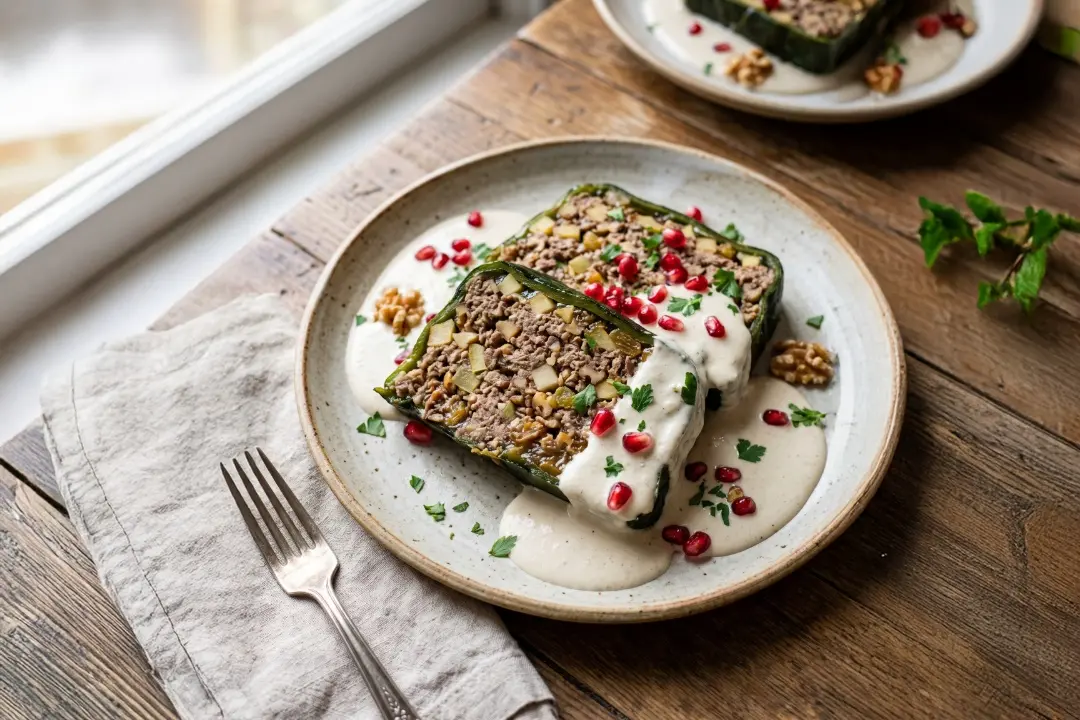
This modern interpretation transforms Mexico’s patriotic culinary centerpiece into an elegant, cold-pressed terrine. Charred poblano skins line a structural matrix containing slow-simmered, aromatic picadillo studded with seasonal fruits and nuts, finished with a velvety walnut nogada coulis and ruby pomegranate arils.
- Yield: Serves 6
- Prep Time: 1 hour 15 minutes
- Cook Time: 50 minutes
- Chilling / Setting Time: 4 hours (or overnight)
- Total ETA: 6 hours 5 minutes
The Science of Flavor Layering & Sauté Chemistry
Crafting a balanced chile en nogada relies on the harmonization of five distinct flavor profiles: earthy smoke, savory fat, sweetness, acidity, and rich tannins.
-
Independent Sautéing & Moisture Control: Each ingredient holds a distinct water content and sugar density. Sautéing fruits alongside meats causes steaming rather than browning. Cooking each aromatic and fruit component individually in isolated fat fractions triggers the Maillard reaction on the meat proteins without scorching the fruit fructose. It also retains crisp cellular turgor in the apples and pears via rapid cellular starch gelatinization.
-
Phenolic Bitterness Elimination: Fresh walnuts contain high concentrations of astringent polyphenols and tannins in their outer skins. Peeling the skins down to the ivory nutmeat ensures the nogada sauce remains sweet, nutty, and alabaster white without astringency./li>
-
Lipid-Capsaicin Dispersion: The dairy fats from the goat cheese and Mexican crema bind to capsaicin molecules from the poblano pepper, softening the heat across the palate and allowing the aromatic clove and cinnamon terpenes to come forward.
Structural Gel Matrix: Chilling reduced bone broth allows natural gelatin proteins to form a reversible colloidal gel network, holding the picadillo together when sliced cold without requiring dense starch binders./li>
Phase 1: Blistering and Prepping the Poblanos- Place the whole poblano peppers directly over an open flame on a gas burner or a screaming-hot cast-iron comal. Char the skins evenly until 95% blackened and blistered, turning every 90 seconds.
- Transfer immediately to a sealed container or bowl covered with plastic wrap; allow them to sweat for 12 minutes to steam-loosen the skin.
- Gently rub off the charred cuticle using a dry paper towel (avoid running under water, which washes away essential fat-soluble roasted flavor compounds).
- Slit each pepper down one seam, remove seeds and core veins, and trim into flat, clean rectangular panels. Set aside on parchment paper.
Phase 2: Individual Sauté Technique for Picadillo- The Meat: Heat 15 ml lard in a 12-inch heavy-bottomed stainless steel pan over medium-high heat. Add the ground pork and beef. Break apart into fine curds and sear without stirring for 3 minutes to develop a deep brown crust. Season with salt, drain 50% of the rendered fat into a ramekin, and transfer meat to a large mixing bowl.
- The Alliums: In the remaining pan fat, drop the flame to medium. Add the brunoised onions; sauté for 4–5 minutes until translucent and edges begin to turn pale gold. Add the minced garlic and cook for exactly 60 seconds until fragrant. Deglaze with the Oloroso sherry, scraping up fond from the bottom of the pan. Pour over the resting meat.
- The Tomatoes: Add 10 ml fresh lard to the pan. Add tomato concassé, ground cinnamon, clove, and allspice. Simmer over medium-low heat until the tomatoes concentrate into an artisanal paste and the oil separates from the solids (approx. 6–8 minutes). Combine with the meat.
- The Plantains: Add 10 ml lard over medium heat. Fry diced plantain cubes separately until crisp and golden brown on all sides (3 minutes). Transfer with a slotted spoon to a paper-towel-lined tray.
- The Orchard Fruits: Add remaining 10 ml fat to the hot skillet. Flash-sauté the apples, pears, and peaches for 2 minutes—hot enough to caramelize outer surfaces while preserving internal crunch.
- Incorporation: Fold the sautéed fruits, plantains, golden raisins, blanched almonds, and toasted pine nuts into the meat-allium mixture. Stir in 100 ml of warm, gelatinized bone broth. Adjust seasoning with salt and fresh cracked pepper.
Phase 3: Assembling & Setting the Cold Terrine- Line a 20cm times 10cm (8x4 inch) rectangular terrine mold or loaf pan with double-layered plastic wrap, leaving a 2-inch overhang on all sides.
- Line the base and walls of the mold with the flat, charred poblano pepper panels, overlapping edges by 5mm to prevent filling seepage. Reserve 2 poblano panels for the top seal.
- Spoon the warm picadillo mixture into the lined mold, tamping down with an offset spatula to eliminate air pockets. Pour remaining 80 ml warm bone broth evenly over the top so the gelatin settles into every void.
- Fold the pepper panels over the top, cover with the plastic wrap overhang, place a cardboard-wrapped weight or a second identical loaf pan loaded with 500 g of weight on top, and refrigerate for a minimum of 4 hours at 4C (39F).
Phase 4: Blending the Nogada Emulsion- In a high-speed blender, combine peeled walnuts, goat cheese, crema Mexicana, dry sherry, milk, sugar, and sea salt.
- Blend on high speed for 90–120 seconds until completely emulsified into a pale, glossy cream with the texture of heavy sauce. Pass through a fine chinois sieve for a satin-smooth finish. Chill in an airtight bottle until service.
Phase 5: Deconstructed Plating & Presentation- Unmold the chilled poblano terrine onto a cold cutting board. Using a warm, razor-sharp slicing knife (dipped in hot water and wiped dry between cuts), portion the terrine into clean $2.5cm$ (1-inch) thick rectangles.
- Spoon 45 ml of cold walnut nogada sauce onto the center of each chilled plate, spreading it into a wide teardrop or circular mirror.
- Center a sliced terrine block squarely on top of the sauce.
- Dress the crown with a linear cascade of vibrant pomegranate arils, fresh parsley leaves, and toasted pine nuts. Finish with droplets of cold parsley oil around the perimeter.