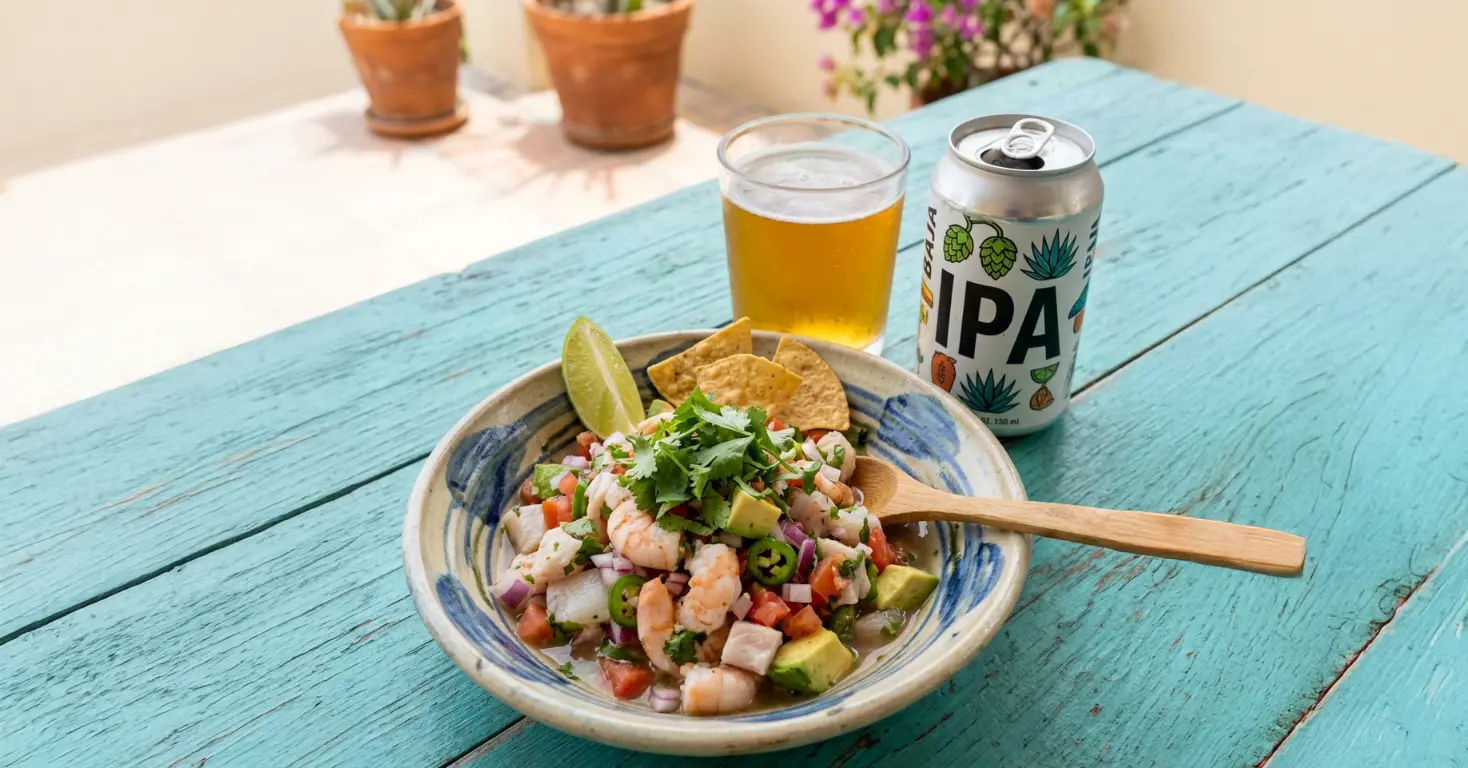
This recipe reinvents the classic coastal Mexican ceviche by introducing the complex, resinous notes of a local IPA. The bitterness of the hops balances the high acidity of the citrus, while the malt profile adds a subtle sweetness that rounds out the brine of the seafood.
- Yield: Serves 4 people
- Total ETA: 45 minutes (15 mins prep, 20 mins curing, 10 mins sautéing)
Ingredients
-
500g Fresh White Fish (Sea Bass or Snapper), cut into 1cm cubes
-
250g Shrimp, peeled, deveined, and halved
-
1 cup Freshly squeezed Key Lime juice
-
1/2 cup Mexican IPA (choose one with citrusy or tropical hop notes)
-
1 Large Red Onion, finely sliced into half-moons
-
2 Roma Tomatoes, seeded and diced
-
2 Serrano Peppers, minced (remove seeds for less heat)
-
1 Garlic clove, smashed and minced
-
2 tbsp Olive Oil (for sautéing)
-
1/2 cup Fresh Cilantro, chopped
-
1 tsp Sea salt (plus more to taste)
-
1/2 tsp Cracked black pepper
Nutrition
Calories
285 kcal
Protein
34g
Total Fat
11g
Carbohydrates
12g
Dietary Fiber
4g
Sodium
620mg
The Science of Flavor Layering
In culinary science, "layering" is the process of building depth so that the palate experiences a sequence of tastes rather than a single monolithic flavor.
1. The Acid-Alcohol Matrix: Ethanol (from the IPA) is a powerful solvent that carries flavor molecules more effectively than water. By mixing beer with lime juice, we create a delivery system that penetrates the fish faster, carrying the floral hop notes into the protein.
2. Maillard vs. Maceration: Traditional ceviche relies on cold acid maceration. By sautéing the vegetables separately, we introduce Maillard reaction products—savory, toasted notes—that provide a "bottom note" to the "top notes" of the citrus and hops.
3. The Bitterness Bridge: The Iso-Alpha acids in the hops act as a bridge between the sharp acidity of the lime and the creamy fats of the avocado.
1. The Cold CureIn a glass or stainless steel bowl, combine the cubed fish and shrimp. Pour the lime juice and the Mexican IPA over the seafood. Ensure the liquid completely covers the protein. Cover and refrigerate for 20 minutes. The citric acid will denature the proteins (the "cooking" process), while the IPA infuses the flesh.
2. Precision Sautéing (The Individual Technique)To achieve perfect texture, we will sauté the vegetables individually to control their water release and caramelization. Heat a small amount of olive oil in a pan over medium-high heat for each step:
- The Onions: Sauté until just translucent but still holding a "snap." Remove from the pan.
- The Peppers & Garlic: Sauté for 60 seconds until fragrant. Do not let the garlic brown. Remove and combine with onions.
- The Tomatoes: Sauté for only 90 seconds. You want to blister the skin slightly without turning the flesh into a sauce. Remove and cool.
3. Temperature EquilibriumAllow the sautéed vegetables to cool to room temperature. Adding hot vegetables to cold seafood will ruin the texture of the fish.
4. The IntegrationDrain approximately 30% of the curing liquid from the seafood (this prevents the ceviche from being too soupy). Fold in the cooled sautéed vegetables, cilantro, and diced avocado.
5. Seasoning and ServiceAdd sea salt and cracked pepper. Toss gently to avoid mashing the avocado. Let the mixture sit for 5 minutes for the flavors to meld. Serve immediately with corn tostadas or thick tortilla chips.