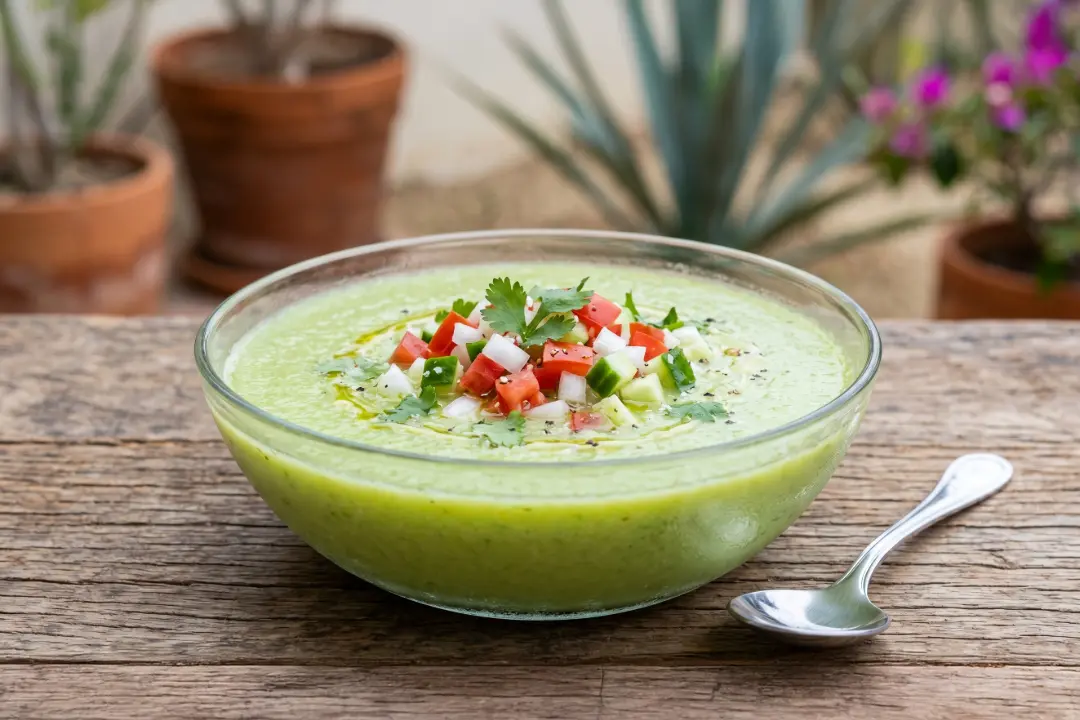
Welcome to the kitchen. Today, we are breaking the traditional rules of a classic Spanish Andalusian gazpacho to build something completely unique: a Smoked Tomatillo Gazpacho.
This dish redefines the standard chilled summer soup by replacing the sweet, raw red tomato base with the bright, sharp tang of roasted, smoked husked tomatillos and lacto-fermented green tomatoes. To fully develop the flavor profile, we will utilize a precise, professional restaurant technique: sautéing each aromatic component individually before blending. This prevents the vegetables from steaming together, allowing us to control the exact caramelization and moisture loss of each ingredient.
The result is a highly complex, vibrant, pale green soup that balances deep smoke, crisp acidity, and a rich, velvety texture.
Recipe Specifications
- Servings: 4 people (makes approximately 1 liter)
- Prep Time: 25 minutes
- Cook Time: 20 minutes
- Chilling/Marination Time: 2 hours
- Total Estimated Time (ETA): 2 hours 45 minutes
The Science of Flavor Layering
In culinary arts, flavor layering is the strategic structure of taste sensations—sweet, sour, salty, bitter, and umami—so they hit the palate sequentially rather than all at once. This recipe maximizes that journey through three distinct scientific pillars:
1. Maillard Reaction vs. Volatile Acidity: Raw green vegetables possess sharp, sulfurous, and highly volatile flavor compounds. By charring the tomatillos under a broiler, we break down harsh acids into natural sugars and introduce rich, smoky phenols.
2. Individual Moisture Management: When vegetables are crowded into a single pan, they release water simultaneously, dropping the pan temperature below 100°C (212°F). This causes them to stew in their own juices. Sautéing each vegetable separately allows us to reach temperatures above 140°C (284°F) rapidly. We can caramelize the sugars in the onions, drive off the bitter water from the cucumbers, and soften the fibrous skin of the peppers without overcooking anything.
3. Lacto-Fermentation Umami: Raw green tomatoes lack the deep glutamic acid (umami) found in ripe red tomatoes. Lacto-fermentation utilizes beneficial bacteria to convert simple sugars into lactic acid. This provides a soft, complex sourness while unlocking deep savory depths that anchor the bottom notes of the soup.
Step 1: Smoke and Char the TomatillosLine a baking sheet with heavy foil. Arrange the halved tomatillos cut-side down. Place them directly under a high broiler for 6 to 8 minutes until the skins are deeply blackened, blistered, and the flesh has collapsed. Transfer the tomatillos and all their released juices into a bowl; cover with plastic wrap to steam for 5 minutes, trapping the smoky, volatile aromas.
Step 2: The Precision Sauté SequencePlace a heavy-bottomed cast-iron skillet over medium-high heat. You will cook each vegetable individually, wiping the pan clean with a dry towel between batches.
- The Onions: Add 10ml of olive oil to the pan. Sauté the diced white onion with a pinch of salt for 4 to 5 minutes until translucent with light golden edges. Remove and set aside in a large mixing bowl.
- The Bell Peppers: Add 10 ml of olive oil. Sauté the green bell pepper for 3 minutes until skin slightly blisters but retains a bright green color. Add to the mixing bowl.
- The Cucumbers: Add 5 ml of olive oil. Sear the cucumbers for just 90 seconds. We want to draw out surface moisture and intensify their grassy flavor without losing their clean crispness. Add to the bowl.
- The Garlic: Lower the heat to medium. Add 5ml of olive oil and the sliced garlic. Cook for exactly 60 seconds until fragrant and pale gold. Do not let it brown, or it will turn bitter. Transfer to the bowl.
Step 3: Bread MacerationAdd the torn sourdough bread pieces directly into the bowl with the warm, sautéed vegetables. Pour the warm charred tomatillos and their accumulated juices over the bread. Toss well. The bread will absorb the moisture, oils, and flavors, breaking down structural starches to ensure a flawless emulsion during blending. Let this mixture rest for 10 minutes.
Step 4: The Master BlendTransfer the macerated bread and vegetable mixture into a high-speed commercial blender. Add the diced fermented green tomatoes, fresh cilantro leaves, fermented tomato brine, and lime juice. Blend on high speed for 2 full minutes until completely liquefied.With the motor running on medium speed, slowly drizzle in the remaining 30ml of cold extra virgin olive oil. This slow stream shears the oil into micro-droplets, creating a stable, silky, creamy emulsion without the use of heavy dairy.
Step 5: Strain, Season, and ChillFor a perfectly smooth, velvet texture, pass the soup through a fine-mesh chinois or strainer, using the back of a ladle to press out every drop of liquid. Season with kosher salt and black pepper.Pour the gazpacho into a glass container, seal it tightly, and place it in the refrigerator for a minimum of 2 hours. Chilling allows the volatile flavors to marry and drops the soup to its ideal serving temperature. Serve chilled, garnished with a few drops of high-quality olive oil and a thin slice of fermented tomato.