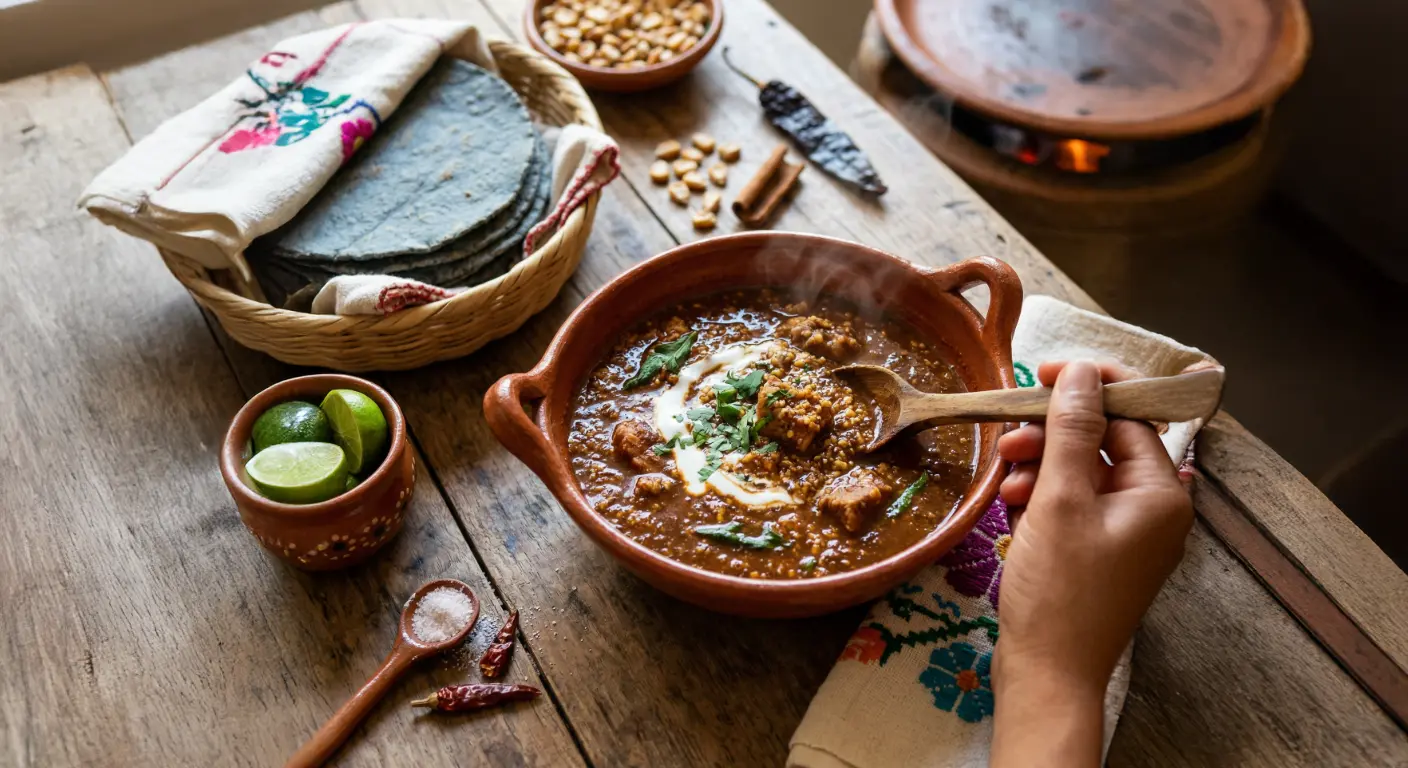
Zeguesa is a profound example of Zapotec culinary engineering. Unlike the more famous velvet-smooth moles, Zeguesa is celebrated for its coarse, rustic texture and the smokiness of toasted corn. Traditionally prepared with pork or chicken, this “ancestral stew” relies on a base of ground toasted maize and dried chilies, creating a nutty, earth-bound flavor profile that tastes of the hearth.
- Yield: Serves 6 people
- Prep time: 30 minutes
- Cook time: 1 hour 15 minutes
Total ETA: ~1 hour 45 minutes
Ingredients
-
1 kg Pork shoulder (espaldilla), cut into 1.5-inch cubes
-
1 Large white onion, halved
-
1 head Garlic, halved crosswise
-
250g Dried white corn (or high-quality cornmeal if unavailable)
-
6 Chilhuacle Rojo chilies (or Guajillo as a substitute), stemmed and seeded
-
4 Pasilla Oaxaqueño chilies, stemmed and seeded
-
3 Cloves of garlic, peeled
-
1 tsp Cumin seeds, toasted
-
2 Medium white onions, finely diced
-
4 Large cloves of garlic, minced
-
500g Heirloom tomatoes, finely chopped
-
1 bunch Fresh Epazote (crucial for the authentic flavor)
-
3 tbsp Lard (preferred) or avocado oil
Nutrition
Total Fat
28 g
Saturated Fat
9g
Cholesterol
95 mg
Sodium
840 mg
Total Carbohydrates
38 g
Dietary Fiber
6g
Protein
34g
Calories
540 kcal
The Science of Flavor Layering
In Zapotec cooking, flavor isn't just "added"; it is built through thermal transformations.
1. Maillard Reaction & Toasting: By toasting the raw corn and cinnamon, we initiate the Maillard reaction, converting starches and sugars into complex, nutty aromatic compounds.
2. Lipid Extraction: Sautéing vegetables separately in fat (lard) allows for the fat-soluble flavor compounds in onions, garlic, and tomatoes to be fully extracted and stabilized before they are diluted by the watery stock.
3. The "Sazón" Finish: The final simmer with Epazote introduces a "high note" (camphor/citrus) that cuts through the heavy, earthy "base notes" of the toasted corn and pork fat, achieving a balanced sensory profile.
1. The Foundation StockIn a large heavy-bottomed pot, add the pork, water, halved onion, and garlic head. Bring to a boil, skim the foam from the surface, reduce to a simmer, and add salt. Cook until the meat is tender (about 50–60 minutes). Strain the broth and set the meat and 2 liters of stock aside.
2. The Toasted Maize (The Thickener)While the meat simmers, place the dried corn and cinnamon in a dry skillet over medium-high heat. Toast, stirring constantly, until the corn is golden brown and fragrant. Let it cool, then grind it in a high-speed blender or spice mill until it reaches the consistency of coarse polenta.
3. The Chile BaseToast the dried chilies lightly on a comal (griddle) until fragrant but not burnt. Soak them in hot water for 15 minutes. Blend the soaked chilies with the 3 garlic cloves, cumin, and a splash of soaking water until perfectly smooth. Strain to remove any skins.
4. The "Separate Sauté" TechniqueThis is the secret to a professional texture:
- The Onions: Heat 1 tbsp of lard in a skillet. Add the diced onions and sauté until translucent and slightly caramelized. Remove and set aside.
- The Garlic: In the same skillet, add a touch more fat and the minced garlic. Sauté for only 45 seconds until pale gold. Remove and set aside.
- The Tomatoes: Add the remaining fat and the chopped tomatoes. Cook on medium-high, stirring frequently, until the water has evaporated and the tomatoes turn into a thick, concentrated paste (sofrito).
5. IntegrationIn a large pot, combine the sautéed onions, garlic, and tomato paste. Stir in the chile base and "fry" the sauce for 5 minutes. Slowly whisk in the 2 liters of pork stock.Gradually rain in the ground toasted maize, whisking constantly to prevent clumps. Add the cooked pork pieces and the sprigs of Epazote.
6. The Final SimmerLower the heat to a minimum. Simmer for 20–25 minutes. The toasted corn will swell and thicken the stew into a rich, velvety consistency. If it becomes too thick, add a little more water or stock. Season with salt to taste.
Serving Suggestion:Serve in deep clay bowls with handmade corn tortillas and a squeeze of lime to brighten the deep, smoky notes.