
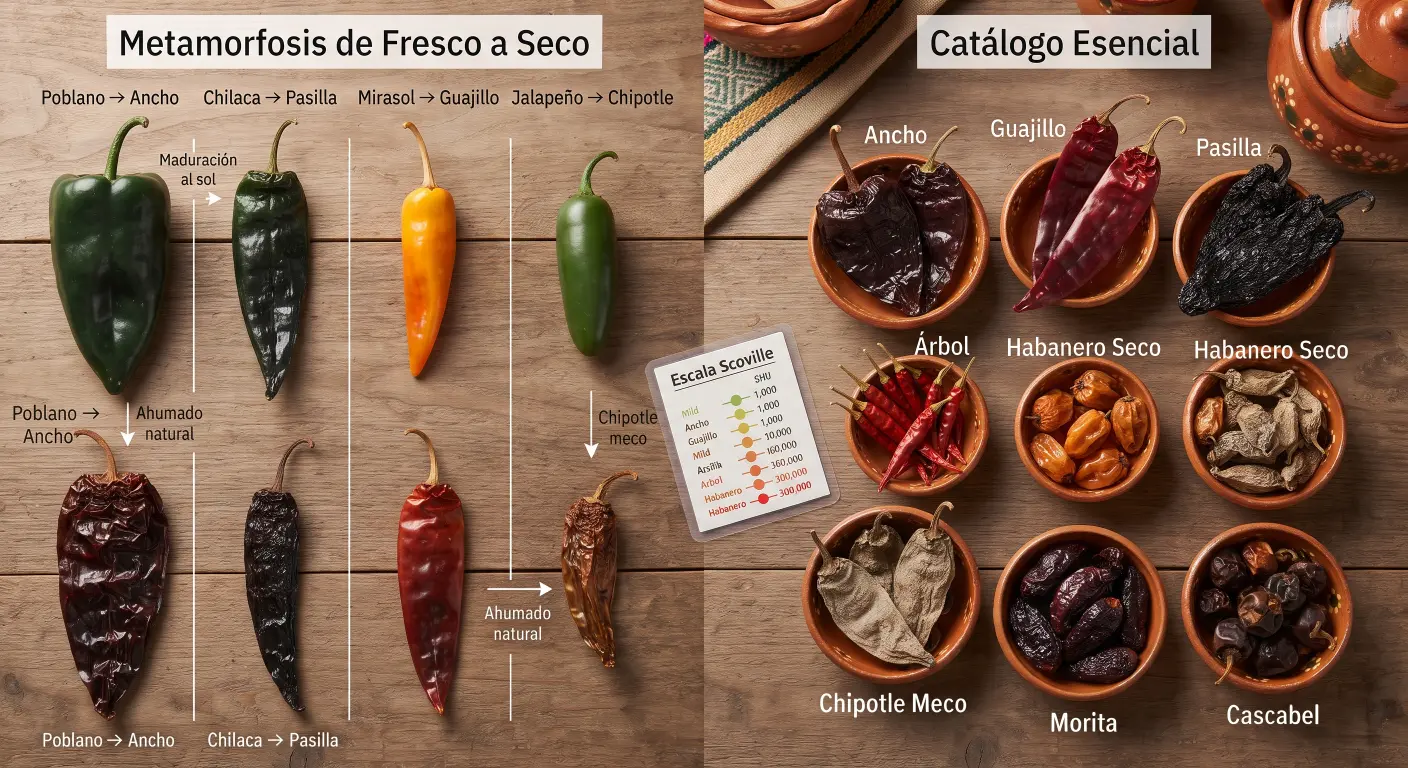
Every great Mexican dish relies on more than just heat—it depends on the botanical chemistry and culinary transformation of native chili peppers.
- Discover the botanical metamorphosis that turns fresh green poblanos into sweet, sun-dried anchos.
- Master the complete flavor profiles and Scoville ranges of essential fresh, dried, and smoked chiles.
- Learn professional techniques for toasting, rehydrating, and balancing capsaicin heat in your kitchen.
Mexican gastronomy commands an extraordinary spectrum of chili peppers. For millennia, Mesoamerican growers engineered botanical lineages that transcend basic heat, transforming nightshade fruits into complex architectural pillars of flavor. Whether you build traditional mole pastes or whip up bright table salsas, mastering these peppers elevates every dish.
Understanding Modern Mexican Chilies: Terroir and Taxonomy
Mexico’s agricultural biodiversity spans coastal lowlands, high mountain plateaus, and arid deserts, creating distinct terroirs that shape every pod according to research by the Mesoamerican agricultural history archives. Chefs have moved beyond the primitive pursuit of capsaicin burn, focusing instead on how sugars caramelize, smoke infuses, and plant acids interact with fats. This guide bridges traditional Mesoamerican heritage with modern culinary science, providing the exact technical framework to select, toast, rehydrate, and deploy Mexican chilies.
The Fresh-to-Dried Metamorphosis: Why Botanical Twins Taste Different
Why Fresh and Dried Peppers Are Chemically Distinct
Treating a dried chili as a mere dehydrated version of its fresh counterpart is a major culinary error. In traditional Mexican cooking, documented extensively by Taste Atlas Global Food Rankings, a fresh pepper and its sun-ripened, dried descendant operate as completely different ingredients. Maturation accumulates starches and complex sugars that undergo radical transformation during dehydration.
The Lifecycle: How Poblanos Become Anchos and Jalapeños Become Chipotles
Naming conventions reflect this precise biological metamorphosis governed by Capsicum botanical taxonomy studies:
- Poblano Ancho: A dark green, fleshy poblano ripens into deep crimson and sun-dries into a wrinkled, sweet, raisin-noted ancho.
- Poblano Mulato: Ripening past bright red into dark brown creates the chocolate- and tobacco-noted mulato.
- Chilaca Pasilla: The slender green chilaca dries into the blackish-brown pasilla, imparting earthy depth and berry notes.
- Mirasol Guajillo: The upward-facing mirasol becomes the smooth, brick-red guajillo, prized for bright acidity and tannin structure.
- Jalapeño Chipotle: Because fleshy jalapeños rot before sun-drying, they ripen to red and cure over smoldering wood smoke to yield chipotle meco or morita.
Sugar Concentration and Maillard Reactions
As a fresh chili loses its 80% to 90% water content under the sun, internal water activity drops and concentrates natural fructose and glucose. Simultaneously, low-temperature Maillard reactions caramelize amino acids. This chemical shift replaces grassy pyrazines with aromatic compounds reminiscent of dried fruit, leather, roasted nuts, and cocoa.
The Essential Catalog: Flavor Profiles of Fresh, Dried, and Smoked Chiles
| Chili Variety | Botanical Form | Scoville Heat Units (SHU) | Primary Flavor Notes | Core Culinary Applications |
| Ancho | Dried Poblano | 1,000 – 2,000 | Sweet dark chocolate, raisin, prune, mild earth | Moles, adobos, rich red enchilada sauces |
| Guajillo | Dried Mirasol | 2,500 – 5,000 | Bright berry, green tea, tannic sharpness | Consommé, barbacoa marinades, tamale salsas |
| Pasilla | Dried Chilaca | 1,000 – 4,000 | Earthy, licorice, cocoa, dried cherry | Mole negro, rich table salsas, duck and beef braises |
| Chipotle Meco | Smoked Red Jalapeño | 3,000 – 10,000 | Deep woodsmoke, tobacco, leather, nutty | Long-simmered stews, hearty bean pots, barbecue rubs |
| Chile de Árbol | Dried Native Pod | 15,000 – 30,000 | Sharp, clean, nutty, direct heat | High-heat table salsas (salsa taquera), chili oils |
| Serrano | Fresh Green/Red | 10,000 – 23,000 | Crisp, bright, grassy, fast-hitting punch | Pico de gallo, fresh green salsas (salsa verde), ceviche |
The Holy Trinity (Ancho, Mulato, and Pasilla)
These three dried peppers form the structural backbone of central Mexican moles and regional Mexican adobos. The Ancho provides sweet, fruity breadth; the Mulato contributes subtle licorice and dark chocolate depth; and the Pasilla adds earthy elegance. Together, they create a multidimensional flavor profile impossible to achieve with a single pepper.
The All-Purpose Reds (Guajillo, Puya, and Cascabel)
These workhorses of everyday Mexican cooking balance moderate heat with high aromatic clarity. Guajillos provide brilliant red color and tangy fruitiness, while Puyas dial up the heat with citrus undertones. Cascabel peppers offer a nutty, warm profile ideal for rustic stews.
The Smoke Masters (Chipotle Meco and Morita)
Smoked over pecan or mesquite wood for days, red-ripened jalapeños transform into chipotles. The greyish-tan Chipotle Meco is smoked longer until leathery, delivering robust, earthy complexity. The plumper Morita undergoes a shorter smoke cycle, preserving fruit-forward red berry brightness alongside moderate heat.
The High-Heat Strikers (Árbol, Serrano, and Habanero)
When dishes demand an aggressive kick, chefs turn to high-heat varietals. The slender Chile de Árbol provides a sharp, direct burn that cuts cleanly through heavy fats. Fresh Serranos offer a grassier sting than jalapeños, while the tropical, floral Habanero delivers intense heat backed by apricot and citrus notes.
Demystifying the Scoville Scale and Capsaicin Chemistry
Why Fixed SHU Numbers Are Biological Estimates
Scoville Heat Unit (SHU) ratings are frequently cited as absolute constants, but capsaicin synthesis analyzed by Scoville Scale chemical metrics functions as a dynamic biological defense mechanism. Plant stress dictates heat: chili plants subjected to arid soils, high sun exposure, and water deprivation concentrate significantly higher capsaicin levels in their placental veins than well-irrigated crops.
Capsaicin Solubility: Water vs. Fat
Capsaicin is strictly lipophilic (fat-soluble) and hydrophobic (water-insoluble). Drinking water only spreads floating capsaicin molecules across pain receptors, intensifying the burn. Dairy fats, alcohol, or plant oils bind to capsaicin, lifting it away from lingual receptors. This chemical reality explains why frying dried chilies directly in warm oil distributes heat smoothly across the palate, whereas water-heavy boils produce a sharp sting.
Kitchen Techniques: Sourcing, Toasting, and Rehydrating Chiles
Selecting Pristine Dried Chilies
High-quality dried chilies feel pliable and leathery, bending without snapping. Brittle, bone-dry pods indicate stale inventory that has lost volatile essential oils. Look for vibrant, natural color tones and reject dusty or mold-speckled pods.
Masterclass in Toasting and Rehydration
Wipe pods clean, stem them, and slit them open to shake out loose seeds. Lay flat on a scorching-hot, ungreased comal utilizing essential kitchen comals or a cast-iron skillet for 10 to 15 seconds per side; scorching turns natural sugars bitter instantly. Submerge toasted pods in simmering water or warm broth for 15 to 20 minutes until softened, reserving the nutrient-rich soaking liquid when free of bitterness.
Storage and Longevity
Store whole dried chilies in airtight glass jars or vacuum-sealed bags in a cool, dark pantry. Volatile flavor compounds degrade after 6 to 8 months. Freeze toasted or rehydrated chili purees in airtight portions for extended preservation.
Frequently Asked Questions About Mexican Chilies
Are jalapeño and chipotle peppers different species?
No. Chipotles are fully ripened, red jalapeños cured and dried over wood smoke. Because green jalapeños contain too much moisture to smoke without rotting, growers allow them to turn red on the vine before processing.
How can I reduce heat without losing flavor?
Capsaicin concentrates in white placental veins and internal seeds, not the flesh. Thoroughly de-seed and devein pods prior to blending. Incorporate natural fats or sweet aromatics to neutralize the capsaicin bind if a sauce is too hot.
What is the best substitute for an authentic dried Mexican chili?
If a recipe calls for an ancho and you only have guajillos, approximate the profile by blending sweet paprika or dark fruit notes with the guajillo’s acidity. Because each chili possesses a unique chemical fingerprint, direct substitutes alter traditional depth.
Why do dried Mexican chilies taste different from fresh peppers?
Dehydration concentrates natural sugars and triggers low-temperature Maillard reactions. This chemical shift replaces grassy pyrazines with complex aromatic notes of chocolate, tobacco, leather, and dried fruit.
Conclusion
Mastering Mexican chilies transforms everyday cooking into an intentional culinary science. Respect the botanical lifecycle from fresh field fruit to sun-dried masterpiece to unlock flavor, smoke, and controlled heat.
Ready to put your chili expertise into practice? Download our free printable Scoville & Flavor Profile Quick-Reference Cheat Sheet or subscribe to our newsletter for weekly artisanal Mexican recipe breakdowns, technique masterclasses, and direct-sourcing guides from top regional producers.
Chiles Change Their Names When They Are Dried YouTube Short
This short video provides a quick visual demonstration of how fresh Mexican chili peppers transform into their dried culinary counterparts.