
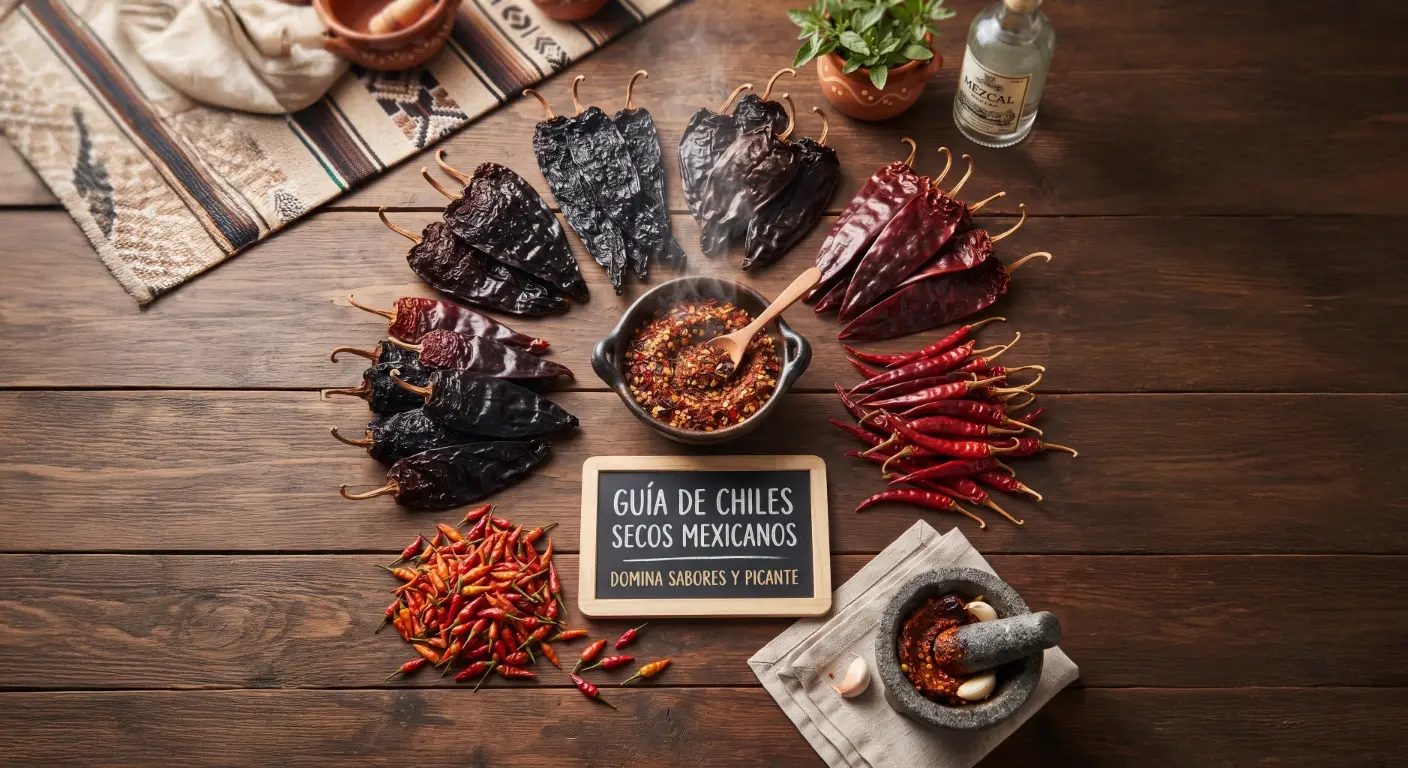
Tired of relying on generic store-bought sauces that lack true depth or struggling to choose the right pepper for your recipes?
- Master the Essentials: Learn the unique flavor profiles of the “Holy Trinity” and key regional Mexican dried chiles.
- Decode Heat and Quality: Understand Scoville heat units and professional standards for selecting pliable, aromatic pods.
- Master Kitchen Techniques: Follow step-by-step instructions for proper dry toasting and rehydration to eliminate bitterness.
- Build Authentic Blends: Discover foolproof commercial proportions to create rich, scratch-made moles and salsas.
Traditional Mexican markets feature towering sacks of red, mahogany, and obsidian pods. They drive authentic regional cuisine. Mastering this comprehensive Mexican dried chili guide unlocks restaurant-quality depth and rich flavor in your home kitchen.
Featured Snippet Block: A comprehensive Mexican dried chili guide details essential varieties—such as the Holy Trinity (Ancho, Pasilla, Mulato), Guajillo, and Chile de Árbol—breaking down Scoville heat levels, flavor profiles, and culinary uses to help you cook authentic Mexican dishes.
Why Dried Chiles Define Mexican Cooking
Fresh peppers provide a grassy bite and sharp capsaicin heat. Dehydration concentrates natural sugars and triggers Maillard reactions Journal of Agricultural and Food Chemistry that build deep flavor notes of tobacco, dark chocolate, leather, and earth. Dried chiles form the structural base for moles, adobos, salsas, and braising liquids. Master these ingredients to replace bottled hot sauces with complex, scratch-made meals. For instance, building traditional mole poblano requires precise pepper selection and toasted depth. Historians trace this culinary foundation back centuries Smithsonian Institution.
Anatomy, Scoville Heat, and Selection Standards
Select pods that feel pliable and leathery instead of snapping like dry twigs. Reject brittle, bleached, or dust-covered pods that have lost their volatile oils. Store your stock in airtight containers inside a dark pantry to maintain freshness, adhering strictly to USDA storage protocols USDA Food Safety and Inspection Service. Heat ratings conform to standardized Scoville metrics [American Spice Trade Association](external-source: American Spice Trade Association).
Quick Reference: Dried Chili Master Matrix
| Chili Variety | Fresh Counterpart | Scoville Heat Units (SHU) | Flavor Profile | Primary Culinary Use |
| Ancho | Poblano | 1,000 – 1,500 | Sweet, tobacco, dark chocolate, raisin | Moles, enchilada sauces, sweet-spicy glazes |
| Pasilla | Chilaca | 1,000 – 2,500 | Earthy, dried berry, prune, licorice | Mole negro, rich beef stews, complex salsas |
| Mulato | Dark Poblano | 2,500 – 3,000 | Deep cocoa, cherry, subtle licorice | Dark sauces, complex adobos |
| Guajillo | Mirasol | 2,500 – 5,000 | Bright red fruit, cranberry acidity, smooth | Birria, pozole, tamale masa, marinades |
| Puya | Mirasol Variant | 5,000 – 8,000 | Fruit-forward, sharp, snappy bite | Taqueria salsas, chili pastes |
| Cascabel | Cascabel | < 5,000 | Nutty, woody, warm, loose rattling seeds | Rustic table salsas, bean pots |
| Chipotle Meco | Jalapeño | 2,500 – 8,000 | Heavy smoke, leather, rich savory depth | Barbecue sauces, long-simmered beans |
| Chipotle Morita | Jalapeño | 2,500 – 8,000 | Brighter smoke, sweet fruit, balanced heat | Creamy chipotle salsas, marinades |
| Chile de Árbol | Árbol | 15,000 – 30,000 | Sharp, clean, fast heat | Fiery red salsas, salsa macha |
| Pequin | Wild Pequin | 40,000 – 60,000 | Intense citrus punch, rapid burn | Crushed table condiments, infused vinegars |
Core Varieties: The Comprehensive Mexican Dried Chili Guide Breakdown
Ancho Chile (Dried Poblano)
The Ancho serves as the dark, wrinkled king of Mexican pantries. It delivers mild heat paired with sweet prune and dark chocolate notes. This pepper provides body and color to classic regional recipes.
Pasilla Chile (Dried Chilaca)
Pasilla translates to “little raisin” and brings an earthy complexity to savory broths. Registering mild-to-moderate heat, it features dried berry and cocoa undertones. This pod anchors authentic regional sauces.
Mulato Chile (Dark Poblano Variant)
The Mulato matures fully before drying, giving it a dark chocolate-brown interior flesh. It carries deep notes of cocoa and black licorice. Use it to thicken and enrich heavy stews.
Essential Reds and Tangy Workhorses
Guajillo Chile
Guajillos feature a smooth, bright reddish-brown skin and a clean flavor profile. They deliver cranberry acidity and red fruit notes. They stain broths vibrant red and anchor authentic birria de res.
Puya Chile
Puyas look like slender guajillos but pack a sharper punch. They offer a fruit-forward aroma and clean heat that cuts through rich fats. Cooks blend puyas with guajillos for extra spice.
Cascabel Chile
Cascabel peppers get their name from the rattling seeds inside their round pods. They stay remarkably mild. Dry-toasting releases a nutty, woody aroma that elevates rustic table salsas.
Smoky Varieties and High-Heat Kickers
Chipotle Meco and Morita
Wood-smoking ripe red jalapeños creates two distinct chipotle styles. Meco peppers smoke for days until leathery, delivering intense tobacco depth. Morita peppers smoke briefly, retaining a bright fruitiness and sweet balance.
Chile de Árbol
Chile de Árbol pods deliver a sharp, fast-acting heat. They power fiery taqueria salsas and form the spicy crunch in oil-soaked artisan salsa macha.
Pequin and Chiltepin
These wild peppers pack intense citrus-forward heat. Chemical analysis highlights their potent capsaicin concentrations National Institutes of Health. Crush them sparingly over finished broths or steep them in vinegar.
Step-by-Step Prep: Toasting and Rehydration
Proper kitchen technique prevents bitter, tough sauces. Master essential knife skills before prepping your pods. Follow these three steps:
- Snip and Seed: Cut off stems, tear pods open lengthwise, and shake out seeds and veins to prevent bitterness.
- Dry Toast: Press pods flat in a cast-iron skillet over medium-low heat for 10 to 15 seconds per side until fragrant.
- Rehydrate: Submerge toasted pods in hot water or broth for 15 to 20 minutes until completely soft.
Master Blending Formulas for Authentic Sauces
Professional chefs combine multiple peppers to build balanced flavor profiles. Use these proven commercial ratios:
- All-Purpose Red Base: Combine 3 Guajillos, 2 Anchos, and 1 Chipotle Morita for balanced color and smoke.
- Oaxaca Dark Mole Base: Blend equal parts Ancho, Pasilla, and Mulato with toasted seeds and Mexican chocolate for your scratch-made enchilada sauce.
Frequently Asked Questions
Should I remove all the seeds from dried chiles?
Yes, removing core veins and heavy seeds prevents bitter compounds from ruining your smooth sauces. Leaving seeds intact introduces harsh, unwanted bitterness and gritty textures to your finished culinary preparations.
How long do dried Mexican chiles last in the pantry?
Dried chiles retain peak aromatic oils and vibrant color for six to twelve months when stored properly. Keep them sealed in airtight containers away from direct light and heat sources.
Can I substitute fresh peppers for dried ones in traditional recipes?
No, you cannot substitute fresh peppers because they lack the concentrated sugars and smoked depth. Dehydration transforms the chemical profile, creating rich Maillard notes that fresh peppers simply cannot replicate.
What is the best way to grind dried chiles into powder?
Toast the dried pods until completely brittle, allow them to cool fully, and process them in a dedicated spice grinder. Grind the brittle pods until a fine, uniform powder forms.
Start Cooking with Authenticity
Elevate your cooking by picking up a trio of Ancho, Guajillo, and Chipotle pods today. Toast them over cast iron and blend a scratch-made sauce for dinner.
Download our free printable Mexican Dried Chili Flavor & Heat Matrix Cheat Sheet to keep by your stove, and comment below with your favorite pepper!