
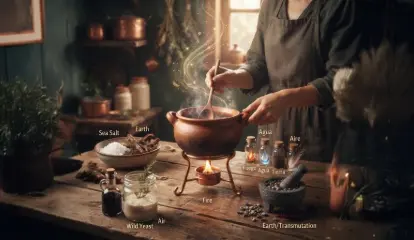
Modern kitchens often feel like mechanical assembly lines, reducing cooking to a hurried chore of reheating convenience foods. Reclaiming your stove as a creative, conscious space restores vitality to your daily routine while turning every meal into an intentional craft.
What you will discover in this guide:
- The core principles of Hermetic alchemy and how they mirror modern culinary chemistry.
- How the four classical elements dictate heat transfer, texture, and flavor development.
- Ancestral techniques like nixtamalization that turn basic staples into bioavailable superfoods.
- Evidence-based culinary habits that quiet stress and sharpen sensory focus at the cutting board.
Alchemy in the kitchen is the practice of treating cooking as an intentional transmutation of raw matter into nourishing medicine. Grounded in Hermetic philosophy and food chemistry, it links physical reactions—like fermentation and caramelization—to cultural symbolism, sensory memory, and the focused presence of the cook.
The Alchemical Crucible: Cooking as Physical Transmutation
Early humans sparked the first revolution long before medieval scholars chased the Philosopher’s Stone. They transformed fibrous, bitter roots and tough game into easily digested sustenance. This thermal leap spurred human encephalization and metabolic expansion, cutting digestion time and gathering early tribes around a shared hearth.
Solve et Coagula: The Chemistry of Culinary Transformation
Hermetic philosophy centers on a single directive: solve et coagula, or dissolve and coagulate. In culinary science, this exact rhythm governs the extraction of texture and the construction of deep flavor profiles.
- Dissolution (Solve): Searing collagen-rich cuts and simmering them in acidic liquids breaks down tough triple-helix proteins into tender, soluble gelatin. Heat fractures plant cell walls, venting sharp sulfurous compounds while concentrating native sugars. Learn how to calibrate this balance in our guide to [mastering slow-simmered bone broths and stocks](internal-link-placeholder: Bone Broth and Stock Reduction Guide).
- Coagulation (Coagula): As simmering liquid reduces, dissolved proteins link into a stable matrix. Lipids emulsify with starches, thickening the broth into a cohesive sauce whose individual elements cannot be separated back into isolated parts.
The Hearth as the Philosopher’s Vessel
Paracelsus insisted that nature stamps every botanical specimen with visual signatures pointing to its medicinal purpose. Historic cooks applied this doctrine directly, crushing aromatics in stone mortars and brewing restorative tonics in heavy cast-iron cauldrons.
During the mid-20th century in Mexico, surrealist painters Leonora Carrington and Remedios Varo treated the domestic stove as an occult workspace. Carrington documented unusual culinary preparations, blending garlic, game, and chemical pigments into symbolic feast courses. Her work reclaimed the domestic hearth as a platform for creative autonomy and intellectual authority, demonstrating that cooking operates as deliberate, empowering sorcery.
Crossing the Threshold: From Wild Nature to Culture
Anthropologist Claude Lévi-Strauss identified cooking as the primary dividing line between biology and civilization in his foundational work, The Raw and the Cooked. Raw items belong to the untamed wilderness. Cooked dishes represent human society. Rotted matter signals biological decay. Applying flame to raw provisions marked humanity’s first philosophical act: converting wild matter into communal nourishment.
The Four Classical Elements in Modern Cooking
Ancient philosophers categorized the material world into four baseline vectors: Earth, Water, Fire, and Air. In professional kitchens, these forces represent the thermodynamic variables that govern flavor balance.
| Classical Element | Culinary Medium | Biochemical Mechanism | Functional Kitchen Role |
| Earth | Salt, roots, tubers, bone marrow | Mineralization, osmosis, structural rigidity | Builds textural foundation and anchors seasoning |
| Water | Stocks, reductions, broths, infusions | Hydrolysis, solvent extraction, hydration | Dissolves compounds and circulates essential nutrients |
| Fire | Cast-iron sears, glowing coals, dry roasting | Pyrolysis, the Maillard reaction, caramelization | Generates complex aromatic rings and deep crusts |
| Air | Sourdough starters, lacto-brines, steam | Gas expansion, yeast respiration, oxidation | Lifts dense doughs and distributes aromatic volatiles |
Earth: Minerals, Salt, and Structural Grounding
Earth supplies the physical architecture of every savory dish. Root vegetables absorb trace elements via symbiotic fungi, while simmered marrow bones yield bioavailable phosphorus and calcium. Unrefined sea salt acts as the ultimate culinary clarifier: its osmotic draw extracts bitter juices, concentrates interior sugars, and inhibits spoilage microbes.
Water: The Universal Solvent and Flavor Conduit
Water distributes aroma throughout the cooking vessel. It hydrates raw starches, triggering swelling that softens hard grains into palatable starches. Simmering water leaches free glutamates and nucleotides from meat and dried seaweeds, synthesizing savory umami compounds while trapping volatile aromas that dry heat would burn away. Explore proper hydration ratios in our [artisan sourdough and wet-dough guide](internal-link-placeholder: Sourdough Hydration and Grain Fermentation).
Fire: The Catalyst for the Maillard Reaction
Fire sparks immediate chemical transmutation. At surface heat above 280°F (140°C), thermal energy drives the Maillard reaction, binding amino acids to reducing sugars. This process generates hundreds of new flavor compounds—such as roasted pyrazines and nutty furans—that never existed in the raw ingredients. Learn to manage thermal momentum using our breakdown on [cast-iron heat retention and skillet care](internal-link-placeholder: Cast-Iron Seasoning and Heat Control).
Air: Airborne Ecology and Wild Fermentation
Air introduces invisible life into the kitchen. Microscopic wild yeasts (Saccharomyces cerevisiae) and lactic acid bacteria settle onto moist grain flours and saline vegetable brines. These tiny organisms digest simple sugars, synthesize lactic acid, and release carbon dioxide bubbles that transform dense flour paste into an open, digestible crumb.
Decoding Ingredient Symbolism: Hidden Science in the Pantry
Pantry staples carried deep spiritual resonance across global cultures centuries before modern industrial supply chains commodified them.
Raw Field Corn ──[ Slaked Lime + Heat ]──> Alkaline Nixtamal ──[ Basalt Metate ]──> Cohesive Masa
(Bound Niacin / Insoluble) (Earth & Thermal Chemistry) (Bioavailable Calcium & Vitamin B3)
Corn and Nixtamalization: The Alchemical Grain
In the Mayan Popol Vuh, deities molded the first true humans from yellow and white maize dough. Raw field corn contains bound niacin (vitamin B3) and lacks balanced essential amino acids, leaving corn-reliant populations vulnerable to pellagra.
Indigenous Mesoamerican cooks eliminated this threat through nixtamalization: boiling dry kernels in an alkaline wash of water and slaked lime (calcium hydroxide) or clean wood ash. According to data recorded in the [Journal of Agricultural and Food Chemistry](external-source: ACS Food Science & Technology Repository), this simple chemical step:
- Dissolves the indigestible pericarp hull.
- Frees locked niacin for immediate intestinal uptake.
- Increases bioavailable dietary calcium by more than 750%.
- Restructures grain storage proteins to create an elastic, workable dough (masa).
For step-by-step processing ratios, see our [traditional home nixtamalization walkthrough](internal-link-placeholder: Step-by-Step Nixtamalization Guide).
Bread and Salt: The Ancient Covenant of Harbor
Across Mediterranean and Slavic territories, presenting bread and coarse salt establishes an unbreakable covenant of hospitality. Bread honors sustained field labor and wood-fired baking. Salt represents preservation and incorruptibility. Sharing these staples signals that host and traveler share protection under one roof.
Bitter Herbs: Waking Sluggish Digestion
Wild spring greens, chicory, and foraged quelites represent physical renewal and systemic purification. From a clinical perspective, plant bitterness stems from protective phytochemicals—including glucosinolates and sesquiterpene lactones. These molecules stimulate lingual receptors, prompting rapid gastric acid secretion and hepatic bile discharge to prepare the gut for rich proteins.
Fats and Oils: The Solar Seal of Flavor
Rendered animal fats and cold-pressed olive oils act as thermal shields and flavor carriers. Ayurvedic medicine treats clarified butter (ghee) as pure solar essence that carries herbal constituents across protective cellular membranes. Fats also coat the palate, slowing the evaporation of volatile spice molecules and extending the sensory finish of a meal.
Neurobiology Meets Gastronomy: The Cook’s Mind-Body Link
The connection between intentional cooking and personal wellbeing rests on documented human neurophysiology.
Olfactory Processing in the Amygdala
Aroma signals bypass the sensory relay of the thalamus, traveling directly into the amygdala (the emotional hub) and the hippocampus (the memory center). Unlike sight or sound, aromatic compounds hit the olfactory epithelium and trigger rapid affective responses. The aroma of browning butter or baking yeast sparks vivid autobiographical recall within milliseconds.
Intentional Cooking Lowers Stress
Distracted, hurried cooks make simple technical mistakes: fats scorch past their smoke point, aromatics char into bitter carbon, and emulsions break under uneven heat. Approaching the stove with clear intention activates focused sensory feedback:
- Tuning your ears to the shift from a wet hiss to a sharp, rhythmic sizzle.
- Watching the surface tension of vegetable oil shift into shimmering ribbons before adding aromatics.
- Tasting sauces across three separate temperature zones—scalding heat, resting warmth, and room temperature—to balance seasoning accurately.
The Gut-Brain Connection
The enteric nervous system lines the digestive tract, operating as a functional “second brain.” Research published by the National Institutes of Health confirms that gastrointestinal tissue produces roughly 90% of the human body’s peripheral serotonin. Eating unpasteurized lacto-fermented vegetables and naturally leavened breads introduces active probiotic strains. These microbes ferment dietary fibers into short-chain fatty acids, dampening systemic inflammation and lifting mood.
Practical Kitchen Rituals: How to Cook with Intent
Practicing kitchen alchemy requires no specialized occult tools. It simply demands consistent, mindful attention at every phase of food prep.
1. Build an Intentional Mise en Place
Clear all unnecessary tools, dirty dishes, and packaging from your workspace before lighting a flame. Arrange prepared ingredients in small ceramic bowls ordered by their cooking sequence. Crush whole spices by hand and inhale their aromatic oils before dropping them into warm oil to center your attention.
2. Match Heat to Thermodynamic Goals
Select cooking temperatures based on the exact structural transformation your ingredients require:
- Low and Slow (Water Vector): Maintain temperatures between 180°F–200°F (82°C–93°C) to dissolve tough connective tissue into rich broth.
- High-Heat Sear (Fire Vector): Heat seasoned cast iron past 400°F (204°C) to brown surface sugars without overcooking the center.
3. Maintain a Living Household Culture
Keep an active microbial culture on your kitchen counter: a vigorous sourdough starter, a crock of fermented seasonal vegetables, or a jar of raw cider vinegar mother. Feeding a living culture connects your kitchen routine to natural biological cycles while producing fresh probiotic cultures for your table. Discover starter maintenance schedules in our fermented condiments and pantry guide.
4. Serve Meals as a Deliberate Gathering
Complete your cooking ritual by bringing conscious focus to the dining table. Turn off glowing screens, carve proteins in front of your guests to release hot aromatic steam, and pause for a quiet breath of gratitude for the soil, sun, and hands that produced the meal.
Frequently Asked Questions
What does “alchemy in the kitchen” mean?
Kitchen alchemy describes cooking as both a precise biochemical science and a mindful craft. It links thermal reactions—such as caramelization, fermentation, and protein breakdown—with intentional focus, recognizing that the preparation of food transforms both the ingredients in the pan and the cook behind the stove.
How do the four classical elements work in home cooking?
The classical elements correspond to core cooking forces: Earth provides raw physical substance and mineral seasoning; Water acts as the solvent for stocks, reductions, and extractions; Fire supplies the heat driving the Maillard reaction; and Air introduces leavening gases, wild yeasts, and aromatic vapors.
Can mindful cooking habits improve mental health?
Yes. Cooking activates the olfactory bulb, which connects directly to the brain’s emotional and memory centers to promote relaxation. Preparing whole foods also supports the gut microbiome, which synthesizes roughly 90% of the body’s peripheral serotonin and helps regulate emotional stress.
Why is nixtamalization considered a prime example of culinary alchemy?
Nixtamalization is an ancient process that simmers field corn in an alkaline bath made of water and slaked lime or wood ash. This reaction dissolves the tough outer hull, unlocks bound niacin (vitamin B3), increases bioavailable calcium by over 750%, and restructures the grain to form pliable dough.
Reclaim the Stovetop
Every meal presents a clear choice: consume prepackaged fuel on autopilot, or approach the counter as an attentive craftsperson. By tuning into heat, moisture, wild microbes, and cultural heritage, you transform plain raw produce into nourishing meals that feed both body and spirit.