
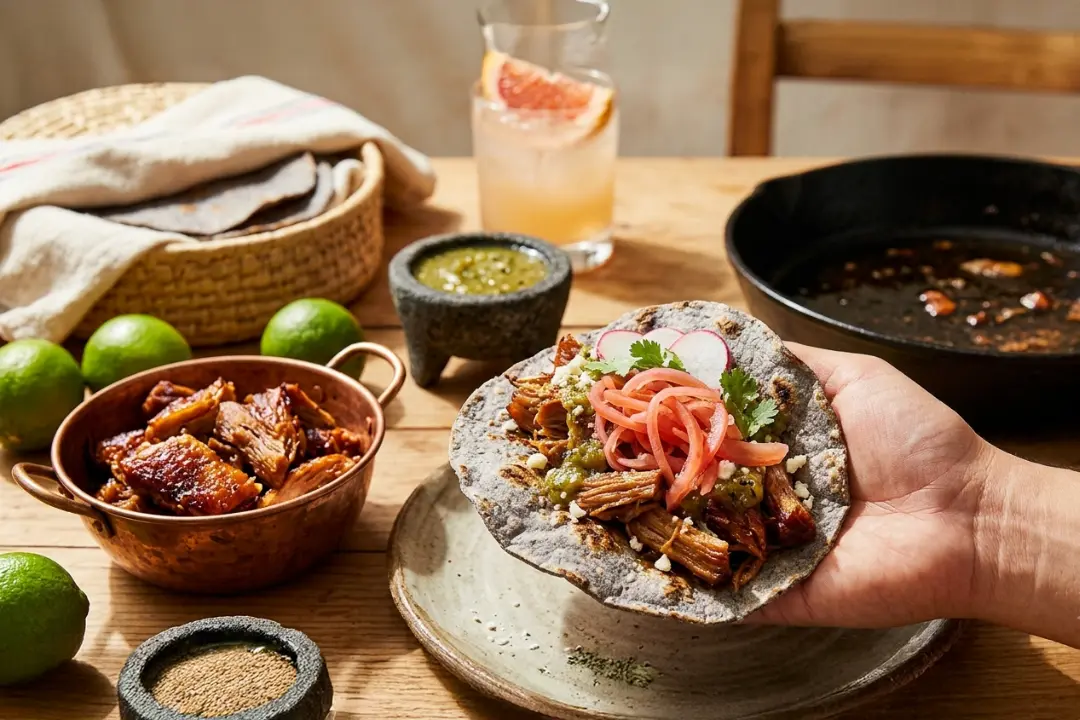
Biting into a warm, fire-blistered corn tortilla filled with duck carnitas is an unforgettable experience. The dark meat yields at the slightest touch, while golden, caramelized edges shatter with a crisp crunch. That textural contrast is the holy grail of taco making. While pork shoulder holds an iconic place in taco history, duck carnitas raises the bar. This dish fuses centuries-old French confit technique with the vibrant aromatics of traditional Michoacán cooking.
Achieving that balance of juicy meat and crackling crust without drying out the duck is not a matter of luck. It comes down to food chemistry, moisture control, and precise fat-rendered cooking.
In this guide, you will master the step-by-step science behind perfecting duck carnitas. Learn why dry-curing duck legs builds deep flavor, how slow fat-braising converts tough collagen into silky gelatin, and how cast-iron searing creates perfectly caramelized shreds every single time.
1. What Are Duck Carnitas? French Confit Meets Michoacán Tradition
Understanding the two distinct culinary roots behind this dish helps you master the technique.
Traditional Mexican carnitas (“little meats”) originated in Michoacán. Cooks simmer pork shoulder, ribs, or belly in pork lard inside a heavy copper kettle (cazo). As water evaporates, the pork cooks low and slow in its own fat alongside orange, garlic, Mexican cinnamon (canela), and a touch of Mexican cola or condensed milk. Once tender, high heat lightly fries and caramelizes the exterior. For reference on classic methods, explore our traditional pork carnitas recipe.
Across the Atlantic, French chefs developed duck confit (confit de canard). Rooted in southwestern French preservation, confit rubs duck legs with salt and herbs to draw out excess moisture, then slow-cooks them submerged in rendered fat at low temperatures. You can read more about classic French fat preservation methods through the James Beard Foundation.
[Phase 1: Dry-Cure] ──> [Phase 2: Confit Simmer] ──> [Phase 3: Citrus Maillard Crisp]
Salt, Citrus Zest, Slow Fat Submersion Duck Fat Searing + Reduced
& Canela (2-4 hrs) (85°C–95°C / 2.5-3 hrs) Sugars (Orange Juice/Cola)
Why Duck Outperforms Pork for Luxury Tacos
Duck legs and thighs bring distinct advantages to carnitas:
- Rich Dark Meat: Heavily exercised dark muscle fibers contain high myoglobin and connective tissue, producing an intensely savory flavor.
- Abundant Fat Caps: Duck skin renders a large volume of natural cooking fat, eliminating the need to buy pounds of commercial lard.
- Silky Lipid Profile: Rendered duck fat melts at a lower temperature than pork lard, coating the palate smoothly without feeling heavy or waxy.
Combining French salt-curing and slow fat-submersion with Mexican citrus and warm spices creates the ultimate duck confit carnitas hybrid.
2. The Science of Crispy Duck Carnitas: Collagen, Fat, and the Maillard Reaction
Creating exceptional duck carnitas tacos relies on three chemical transformations. Skipping any phase leads to either soggy or dry, stringy meat.
Phase 1: Osmosis and Curing
Raw duck legs contain substantial intracellular water. Plunging uncured duck directly into hot fat creates steam, which blocks spices from penetrating the meat.
Rubbing duck legs with kosher salt, citrus zest, and garlic 2 to 4 hours before cooking initiates osmosis. Salt draws surface water out, dissolves, and forms a concentrated brine that reabsorbs deep into the muscle. This process seasons the duck thoroughly while breaking down surface muscle proteins to retain moisture during cooking.
Phase 2: Thermal Breakdown of Collagen
Duck legs pack high amounts of collagen, a tough protein structure binding muscle fibers. High, rapid heat causes collagen to contract violently, squeezing out liquid and leaving the meat rubbery.
Submerging duck legs in rendered fat between 85°C and 95°C (185°F to 200°F) for 2.5 to 3 hours triggers collagen hydrolysis. The tough collagen melts into liquid gelatin, which absorbs up to ten times its weight in water. This yields a silky mouthfeel and keeps the shredded meat juicy when fried later.
Food Science Note: According to Harold McGee’s On Food and Cooking, poultry connective tissue requires sustained heat above 70°C (160°F) to convert into gelatin. Keeping the fat bath gently bubbling between 88°C and 93°C (190°F and 200°F) ensures maximum tenderization without boiling off natural juices. For more on safe internal temperatures, consult USDA poultry cooking safety standards.
Phase 3: The Maillard Reaction and Caramelization
Achieving genuinely crispy duck carnitas requires the Maillard reaction—a chemical process between amino acids and reducing sugars at temperatures above 140°C (285°F). Explore the American Chemical Society’s breakdown of the Maillard reaction for more on protein browning.
Because duck braising in fat remains saturated with water, the meat cannot exceed 100°C (212°F) while submerged. To trigger browning, shred the tender duck, separate it from cooking liquids, and sear it in a hot cast-iron skillet with rendered duck fat and reduced orange juice or Mexican cola. The sugars caramelize alongside the proteins, forming a golden-brown crust over juicy meat.
3. Essential Ingredients for Duck Carnitas: Flavor Profile & Substitutions
Every ingredient performs a specific job in balancing fat and enhancing flavor.
| Ingredient | Role in Recipe | Culinary Science / Flavor Function |
| Duck Legs & Thighs | Primary Protein | High collagen and dark muscle fiber content yield tender shreds. |
| Rendered Duck Fat | Cooking Medium | Low-melting-point lipid that carries fat-soluble flavor compounds. |
| Kosher Salt | Curing Agent | Drives osmosis, deeply seasons meat, and denatures proteins. |
| Fresh Orange & Lime Juice | Acid & Sugar Source | Citric acid balances heavy lipids; natural fructose fuels browning. |
| Mexican Canela (Cinnamon) | Warm Spice | Soft, floral cinnamon bark complements gamey poultry notes. |
| Mexican Oregano | Earthy Herb | High in thymol and carvacrol, adding herbal warmth. |
| Fresh Garlic & White Onion | Aromatic Base | Allicin compounds infuse the cooking fat with savory depth. |
| Mexican Cola / Evaporated Milk | Browning Agent | Provides reducing sugars that accelerate caramelization during searing. |
Spice Profile Breakdown
Unlike French confit—which relies on thyme, garlic, and salt—Mexican duck fat carnitas demand warm, sweet, and earthy aromatics:
- Mexican Canela vs. Cassia Cinnamon: Choose authentic Mexican canela (Ceylon cinnamon). It is soft, easily crushed by hand, and lacks the harsh bitterness of common Cassia cinnamon. Read more in Diana Kennedy’s classic Mexican culinary research.
- Mexican Oregano vs. Mediterranean Oregano: Mexican oregano comes from the Lippia graveolens plant family. Its citrusy, herbal notes complement orange and lime juice, whereas Mediterranean oregano tastes minty and piney. Check the USDA Plants Database entry on Mexican oregano for botanical details.
4. Step-by-Step Guide: How to Make Crispy Duck Carnitas at Home
Follow this step-by-step technique to achieve tender meat with golden, crispy edges every time.
1. Dry-Cure the Duck Legs: Prep Time: 15 min | Chill Time: 2-4 hours.
Pat 4 whole duck legs (about 2.5 to 3 lbs) dry with paper towels. In a small bowl, mix 1.5 tbsp kosher salt, 1 tsp freshly cracked black pepper, 1/2 tsp ground Mexican canela, 1 tsp Mexican oregano, and the finely grated zest of 1 fresh orange. Rub this spice blend evenly over all sides of the duck legs. Place them skin-side up on a wire rack set over a baking sheet and refrigerate uncovered for 2 to 4 hours.
2. Submerge & Slow Confit: Cook Time: 2.5–3 hours.
Preheat your oven to 107°C (225°F), or set a heavy Dutch oven over low heat on the stovetop. Arrange the cured duck legs in a single layer in the Dutch oven. Add 4 smashed garlic cloves, 1 quartered white onion, 2 bay leaves, 2 strips of fresh orange peel, 1/2 cup fresh orange juice, and 2 tbsp lime juice. Pour in enough rendered duck fat (roughly 1.5 to 2 cups) so the duck legs are almost completely submerged. If you need fat, check our guide on how to render duck fat at home. Cover tightly with a lid and transfer to the oven for 2.5 to 3 hours, until the meat is completely tender and pulls away easily from the bone.
3. Shred Meat & Separate Fat: Time: 15 minutes.
Carefully remove the duck legs from the hot fat using tongs and transfer them to a rimmed baking sheet or large cutting board. Allow them to cool for 10 minutes until safe to handle. Discard the bones, skin (unless reserving skin to crisp separately), and cartilage. Gently pull the duck meat into large, bite-sized shreds using two forks. Strain the warm cooking fat through a fine-mesh sieve, separating the clear rendered duck fat from the concentrated dark citrus pan juices settled at the bottom.
4. Cast-Iron High-Heat Crisping: Time: 8-10 minutes.
Heat a large, heavy cast-iron skillet over medium-high heat until hot. Add 2 tablespoons of the reserved clear duck fat. Add the shredded duck meat in a single, even layer—do not overcrowd the skillet. Drizzle 2 tablespoons of the concentrated citrus pan juices and 1 tablespoon of Mexican cola (or fresh orange juice) over the meat. Let the duck cook undisturbed for 3 to 4 minutes until the bottom layer turns dark golden-brown and crispy. Toss gently with a spatula and sear for an additional 2 to 3 minutes before removing from heat.
Crisping Pro Tip: Never overcrowd the skillet or stir continuously. Leaving the shredded duck undisturbed in hot fat builds that signature shattered crust. For professional kitchen principles on heat transfer, review guidelines from the Culinary Institute of America.
5. Perfect Duck Carnitas Pairings: Salsas, Tortillas, and Drinks
Duck carnitas are rich and fat-forward. Balancing the taco requires garnishes with acidity, freshness, and crunch.
┌── Warm Fire-Blistered Corn Tortilla
│
DUCK CARNITAS ────┼── High-Acid Element: Charred Tomatillo Salsa Verde
BUILD │
├── Textural Crunch: Pickled Red Onions & Radish
│
└── Fresh Finish: Cilantro, Lime, & Cotija Cheese
1. The Tortilla Base
Never shortcut the tortilla. Rich duck carnitas demand high-quality corn tortillas. Choose yellow or blue corn tortillas made through traditional nixtamalization. Learn how to press them in our guide to nixtamalized corn tortillas. Warm them over an open flame until soft, pliable, and lightly charred.
2. Salsa Selection
- Charred Tomatillo-Serrano Salsa Verde: The natural oxalic acidity of roasted tomatillos cuts through rich duck fat. Try our roasted tomatillo salsa verde.
- Mango-Habanero Salsa: Tropical fruit sweetness pairs naturally with dark duck meat, while habanero adds clean heat.
3. Textural Garnishes
- Pickled Red Onions: Steep sliced red onions in lime juice, vinegar, salt, and Mexican oregano. Check out our quick pickled red onions for step-by-step instructions.
- Fresh Radishes & Cilantro: Thinly sliced red radishes supply a peppery crunch, while fresh cilantro adds herbal brightness.
- Queso Cotija: A light sprinkle of aged, salty cotija cheese adds a dry, savory finish.
4. Beverage Pairings
- Craft Beer: A hoppy Mexican IPA or a citrus-forward German Pilsner refreshes the palate between bites.
- Cocktails: A classic Mezcal Paloma—combining smoky mezcal, fresh grapefruit juice, lime, and sparkling water—echoes the citrus notes of the carnitas.
- Non-Alcoholic: A chilled glass of tart Agua de Jamaica (hibiscus tea) provides ideal fruit acidity. Try our refreshing agua de jamaica recipe.
6. Frequently Asked Questions (FAQ)
Can I make duck carnitas in a slow cooker or pressure cooker?
Yes.
- Slow Cooker: Place cured duck legs, aromatics, citrus juice, and 1/2 cup duck fat into the slow cooker insert. Cover and cook on LOW for 6 to 7 hours.
- Pressure Cooker (Instant Pot): Cook on HIGH Pressure for 45 minutes, followed by a 15-minute natural pressure release.
Note: Regardless of the appliance used, always finish the shredded meat in a hot cast-iron skillet with rendered duck fat to achieve crispy edges.
Where can I buy rendered duck fat?
Rendered duck fat is widely available in glass jars or tubs at specialty grocery stores, butcher shops, and high-end supermarkets. Alternatively, you can render fat from whole ducks by simmering trimmed duck fat with 1/4 cup of water over low heat until the water evaporates and clear fat remains.
How do I store and reheat leftover duck carnitas?
Store un-crisped braised duck meat submerged in a thin layer of its cooking fat in an airtight container. Refrigerate for up to 5 days or freeze for up to 3 months. Reheat by searing the cold meat directly in a hot cast-iron skillet with a tablespoon of duck fat to restore its crispiness.
What is the ideal internal temperature for duck confit?
Duck legs reach full collagen breakdown when held between 85°C and 95°C (185°F to 200°F) for 2.5 to 3 hours. For detailed scientific data on connective tissue breakdown in poultry, consult the Journal of Agricultural and Food Chemistry.
Can I use duck breasts instead of duck legs for carnitas?
Duck legs and thighs are strongly preferred because they contain high collagen and dark muscle fiber. Duck breasts are much leaner and can dry out during a 3-hour fat-braise. If using a whole duck, remove the breasts after 1 to 1.5 hours of simmering while letting the legs finish.
Master the Ultimate Taco Night
Perfecting duck carnitas combines culinary heritage with kitchen science: dry-curing for deep flavor, slow fat confit for tenderness, and high-heat searing for a shattering crust. It transforms a weekend cooking project into an extraordinary meal.
Now it is your turn to fire up the stove. Gather your ingredients, warm your tortillas, and experience the ultimate taco fusion at home!
Did you make this duck carnitas recipe? Leave a comment below with your favorite salsa pairing, or tag us on social media with your taco creations! Subscribe to our newsletter for more deep culinary guides, recipe breakdowns, and kitchen science tips.