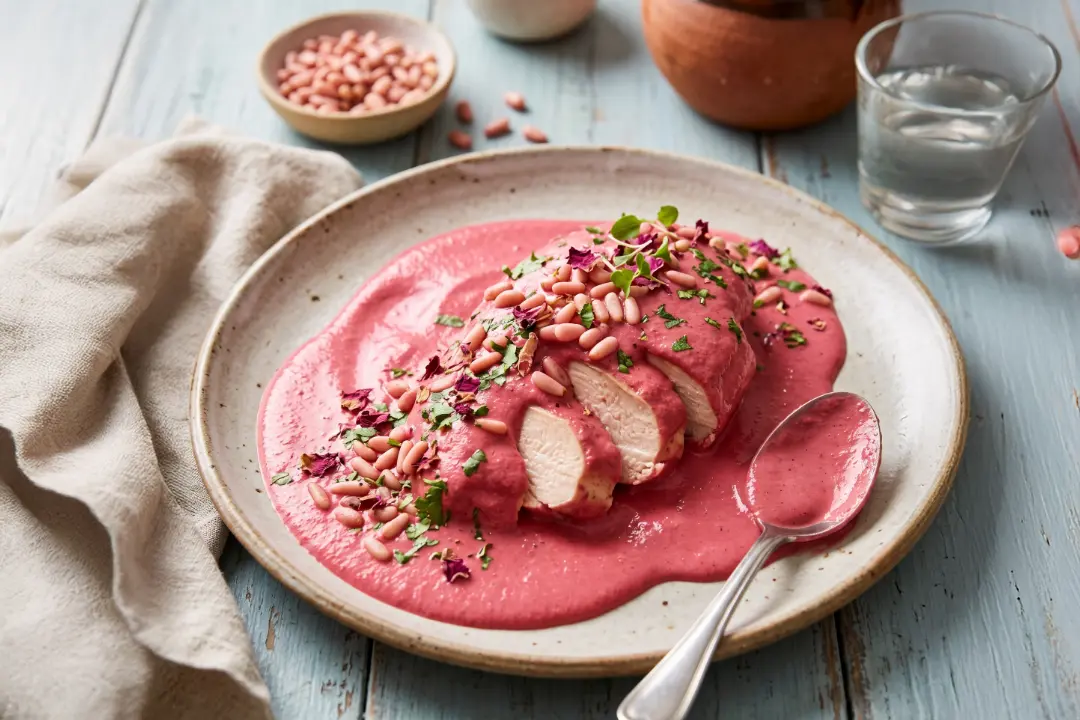
Pink Mole (Mole Rosa), originating from Taxco in Guerrero, Mexico, is an elegant culinary masterpiece celebrated for its signature hue, velvety texture, and complex balance of nutty, sweet, and mild spicy notes. This refined version relies on buttery Mexican pink pine nuts (piñones rosados), high-quality white chocolate, fresh beets for color, floral mezcal, and aromatic spices.
Recipe Overview
- Yield: Serves 6 people
- Prep Time: 30 minutes
- Cook Time: 45 minutes
- Total Estimated Time (ETA): 1 hour 15 minutes
The Science of Flavor Layering
Creating an exceptional mole depends on precise lipid extraction, controlled sugar caramelization, and harmonious emulsion:
-
Maillard Reaction & Volatile Extraction: Toasting nuts and seeds dry in a pan releases lipophilic aromatic compounds (pyrazines and furans) while caramelizing surface proteins.
-
Sequential Sautéing & Moisture Control: Sautéing each aromatic vegetable individually ensures that high-moisture ingredients (like beets and onions) caramelize at their specific optimal temperatures without boiling neighboring low-moisture ingredients in trapped steam.
-
Acid-Sugar-Capsaicin Synergy: Cocoa butter in white chocolate supplies a rich fat blanket that coats the palate, dulling capsaicin's sharp bite while highlighting the floral esters from rose petals and the herbal notes of mezcal. Natural acids from lime juice cut through the dense nut oils to elevate light floral aromas.
-
Natural Betalain Pigmentation: Beets contain heat-sensitive betalain pigments. Sautéing them quickly until soft preserves their bright magenta tint, which blends with the pale ivory of crushed pine nuts and white chocolate to produce a stable pink color.
1.Toast Nuts, Seeds, and Whole Spices:Build the nutty foundation.In a dry skillet over medium-low heat, toast the pink pine nuts for 2–3 minutes until fragrant and lightly golden. Remove immediately and transfer to a blender container. Next, toast the almonds and sesame seeds for 2 minutes; transfer to the blender. Finally, toast the cinnamon stick, cloves, allspice, and rose petals for 30–45 seconds until aromatic. Grind whole spices in a spice grinder or mortar before adding to the blender. For additional background on traditional seed preparation, review the culinary history of mole pastes.
2.Sauté the Aromatics Separately:Precise vegetable texture and moisture extraction.Heat 1 tablespoon of fat in your pan over medium heat.
- Sauté the chopped onions alone for 5 minutes until translucent and soft; transfer to the blender.
- Add garlic cloves to the pan and sauté individually for 2 minutes until golden; transfer to the blender.
- Sauté the habanero slices for 2 minutes to soften capsaicin oils; transfer to the blender.
- Sauté the diced plantain slices for 3–4 minutes until golden on both sides; transfer to the blender.
- Sauté the diced red beet separately with a pinch of salt for 5 minutes until tender. (Keeping the beet separate prevents bleeding color onto other raw ingredients premature to blending). Transfer to the blender.
3.Deglaze with Mezcal and Stock:Extract fond and create emulsification base.Pour the mezcal into the hot pan to deglaze, scraping up any caramelized brown bits (fond). Allow the alcohol to burn off for 1 minute. Pour this liquid into the blender along with 2 cups of hot chicken stock. Read more about pan deglazing techniques in our guide to sauce reduction methods.
4.Blend to Ultra-Smooth Puree:Achieve velvety micro-emulsion.Blend all toasted and sautéed ingredients on high speed for 2 to 3 minutes until completely smooth and velvety. If necessary, strain through a fine-mesh sieve into a bowl to remove any seed hulls, ensuring a silky mouthfeel.
5.Simmer and Emulsify White Chocolate:Develop flavor balance and rich gloss.Melt the remaining tablespoon of fat in a clean saucepan over medium-low heat. Pour in the blended pink mole paste (it will sizzle slightly). Reduce heat to low and simmer gently for 10–12 minutes, stirring constantly with a wooden spoon. Turn off the heat and stir in the chopped white chocolate until melted and fully incorporated into a glossy sauce. Stir in fresh lime juice and salt. Adjust consistency with remaining stock if needed.